Common dropshipping mistakes costing you sales in 2026
Avoid costly setbacks with our guide on common dropshipping mistakes. Learn to pinpoint errors that are hurting your sales in 2026!
Common dropshipping mistakes costing you sales in 2026
TL;DR:
- Dropshipping success depends on proper market research, reliable suppliers, and clear customer communication.
- Avoid costly mistakes by continuously monitoring supplier performance, setting accurate shipping expectations, and maintaining unique branding.
Dropshipping looks simple on paper: no warehouse, no upfront stock, no heavy overheads. But the gap between the theory and a profitable store is where most people quietly fail. Common dropshipping mistakes are not random bad luck. They are predictable, repeatable errors that show up in stores of every size and kill margins before the owner even notices. This article breaks down the most costly ones with specific fixes so you can stop losing money on problems that are entirely avoidable.
Table of Contents
- Key takeaways
- 1. Choosing a niche without proper market research
- 2. Choosing unreliable suppliers and ignoring stock accuracy
- 3. Mismanaging shipping expectations and triggering chargebacks
- 4. Running ads without marketing fundamentals
- 5. Ignoring brand differentiation and store UX
- 6. Neglecting compliance and FTC endorsement rules
- My honest take on what actually sinks dropshipping stores
- How Ecom-eye helps you avoid these costly mistakes
- FAQ
Key takeaways
| Point | Details |
|---|---|
| Poor niche research kills stores early | Entering an oversaturated market without data behind you makes profitable sales nearly impossible. |
| Supplier reliability requires active monitoring | Automation reduces manual work but does not replace the need to track supplier performance consistently. |
| Shipping expectations drive chargebacks | Misaligned delivery windows account for 30% of merchant chargebacks; audit every customer touchpoint. |
| Branding and SEO are not optional extras | Generic stores compete only on price. Differentiated branding and search visibility are what create long-term margin. |
| Compliance failures carry real penalties | FTC endorsement rules apply to dropshippers; undisclosed reviews and fake testimonials risk legal consequences. |
1. Choosing a niche without proper market research
Poor niche selection is consistently cited as one of the top dropshipping mistakes beginners make, and it is easy to understand why. A niche that looks profitable on the surface, perhaps because a few successful stores are visible on social media, may already be completely saturated by the time you enter it.
The problem runs deeper than just competition. When you pick a niche based on gut feeling or what appears to be trending, your marketing angles become generic and your conversion rates reflect that. You end up spending on ads to promote a product nobody is actively searching for, or worse, a product that hundreds of competitors are already selling at a lower price.
Before you commit to a niche, you need data:
- Search volume trends: Use tools like Google Trends to identify whether demand is growing, stable, or declining.
- Competition mapping: Audit how many stores are already ranking for the core search terms in that niche.
- Margin viability: Research average selling prices versus supplier costs to confirm there is room to advertise profitably.
- Audience specificity: Niches with clearly defined buyers convert better than broadly appealing ones.
Pro Tip: Avoid niches where the top search results are dominated by large retailers like Amazon or eBay. You will not outbid their authority. Look for mid-level niches where small stores can rank and convert.
2. Choosing unreliable suppliers and ignoring stock accuracy
The supplier relationship is the operational spine of a dropshipping business. One of the most costly dropshipping errors beginners make is selecting a supplier based on price alone, without verifying their fulfilment reliability, stock accuracy, or communication standards.
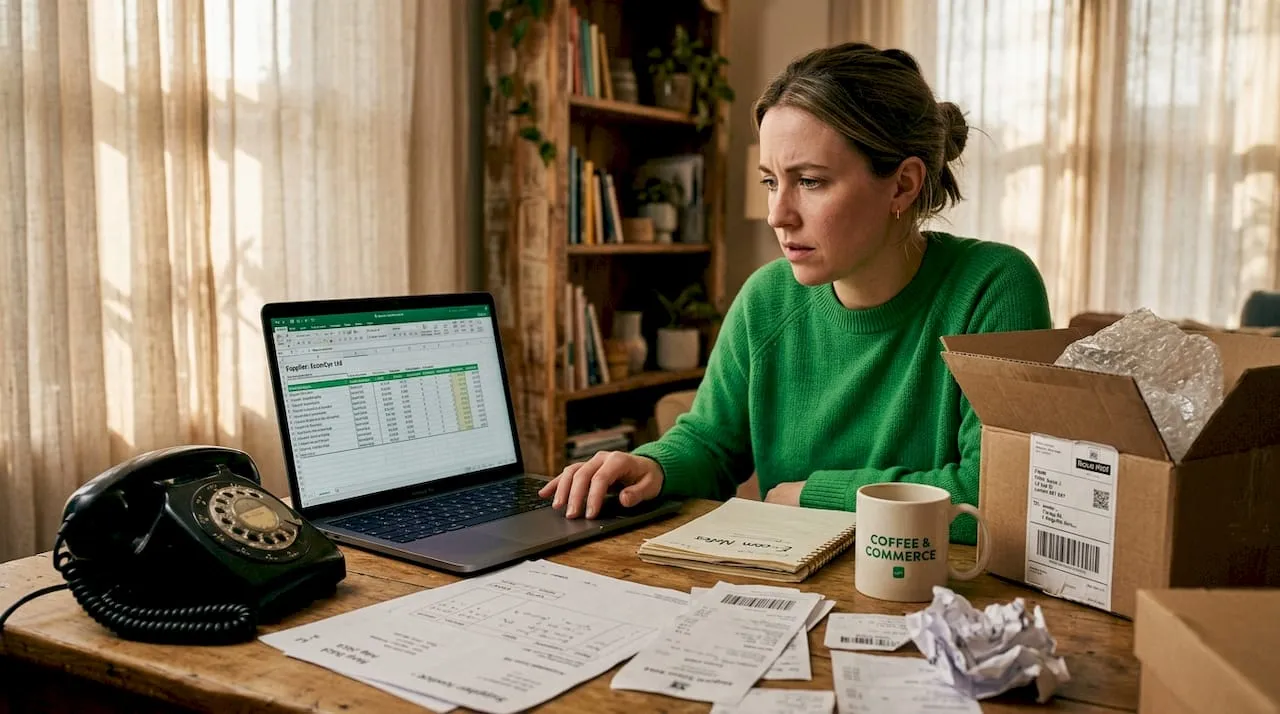
Overselling is a direct consequence of this. Stock inaccuracies cause overselling not through carelessness alone, but through data synchronisation delays. Your store may show an item as available while the supplier sold out hours ago. During demand surges, even typically reliable suppliers can create oversell situations simply through latency in data updates.
The operational fixes here are specific:
- Sync your inventory data as frequently as your platform allows, ideally every few hours rather than daily.
- Set stock buffer thresholds so products with low supplier stock are marked as unavailable in your store before they actually run out.
- Monitor supplier performance metrics such as dispatch time, cancellation rate, and tracking accuracy on a monthly basis.
- Maintain at least one backup supplier for your top-selling products so a single supplier failure does not stop your store.
You should also know which dropshipping pitfalls are most likely to undermine supplier relationships early on. Experienced operators treat inventory sync latency as a known risk factor rather than an occasional nuisance.
3. Mismanaging shipping expectations and triggering chargebacks
Shipping is where the gap between what customers expect and what actually happens becomes financially painful. Mismanaged shipping expectations account for 30% of merchant-caused chargebacks in dropshipping. That is not a small number. A chargeback does not just cost you the sale; it costs you the product, the platform fees, and potentially your payment processor standing.
The core mistake is inconsistency. A customer sees “ships in 3 to 5 days” on the product page, but the checkout says “7 to 14 days” and the confirmation email says nothing at all. That mismatch creates a dispute the moment the package is late.
| Shipping window | Chargeback risk | Recommended action |
|---|---|---|
| 2 to 5 days | Low | Lead with this; use for core products |
| 6 to 14 days | Moderate | Communicate clearly at every touchpoint |
| 15 to 30 days | High | Add proactive updates and refund policy visibility |
| 30 days or more | Very high | Reconsider sourcing or offer only with heavy caveats |
The 2026 fulfilment data from ShipBob confirms that most buyers now expect 2 to 3 day domestic delivery as standard. Selling products that ship from overseas suppliers with 20-plus day windows puts you in direct conflict with those expectations unless you communicate obsessively clearly.
Pro Tip: Audit every single place your store mentions delivery: product pages, cart, checkout, confirmation emails, and order status pages. A single inconsistent message is enough to generate a chargeback claim.
4. Running ads without marketing fundamentals
Paid advertising is where a large portion of dropshipping budgets disappear without return. Running ads without marketing knowledge is one of the top dropshipping blunders because it looks productive while you are doing it. Clicks are coming in. Something is happening. But without a proper understanding of customer acquisition cost, creative testing, and attribution, you are spending blind.
The specific errors here include launching a single ad creative and never testing alternatives, ignoring which demographics actually convert, and scaling ad spend on a product before proving it converts at a small budget first. Many beginners also skip tracking entirely, meaning they cannot tell which campaigns are profitable and which are draining the budget.
Common marketing mistakes to fix immediately:
- Set up proper conversion tracking before spending a single penny on ads.
- Test at least three creative variations per product before drawing conclusions.
- Read your cost per purchase data, not just your click-through rate. Clicks do not pay the bills.
- Budget a fixed testing amount per product and only scale what proves profitable at that baseline.
Understanding why Shopify stores fail on the advertising side helps you avoid the same creative testing failures that sink most new stores.
5. Ignoring brand differentiation and store UX
Selling generic products with generic branding in a market full of identical stores is a losing strategy, and it is one of the most common pitfalls in dropshipping that experienced operators warn about. Undifferentiated branding and poor site navigation actively push buyers away and make price the only competitive lever you have.
The moment your store looks identical to 50 other stores selling the same product, the buyer goes looking for the cheapest option. You are no longer competing on value. You are competing on margin, which is a race to zero.
Brand differentiation in dropshipping does not require a massive budget. It requires a clear positioning statement, a consistent visual identity, product page copy that speaks directly to the buyer’s specific problem, and a checkout experience that does not have unnecessary friction. Store UX problems such as confusing navigation, slow load times, and unclear return policies all erode the trust that converts browsers into buyers.
SEO matters here too. If your product pages use copied supplier descriptions, you are generating duplicate content that Google penalises. Unique, search-optimised product copy is both a ranking factor and a conversion tool.
6. Neglecting compliance and FTC endorsement rules
This section addresses one of the most frequently ignored dropshipping strategy mistakes among newer operators. FTC endorsement rules require that any material connection between a reviewer and a business must be clearly and conspicuously disclosed. That applies to influencer partnerships, paid reviews, and any testimonials you have solicited.
Being truthful is not enough. Material connections must be disclosed in a way that the average consumer can see and understand, not buried in small print or implied through vague language.
Common compliance mistakes dropshippers make:
- Posting customer reviews without disclosing that they were incentivised with discounts or free products.
- Using influencer promotions without requiring the influencer to disclose the paid relationship.
- Manufacturing reviews through review-swap schemes or fabricating testimonials entirely.
Beyond legal exposure, the reputational damage when this kind of activity surfaces is severe. Understanding copyright issues in dropshipping also helps you stay on the right side of platform policies and avoid account terminations.
Poor customer service compounds all of the above. Ignoring customer concerns leads directly to dispute escalations, negative reviews, and eventual store closures. A simple, responsive support process prevents most refund situations from becoming chargebacks.
My honest take on what actually sinks dropshipping stores
I have seen stores fail at every stage, and the pattern is almost always the same. It is not bad luck and it is not a saturated market. The stores that fail are the ones treating dropshipping as a passive income source rather than a real business with operational requirements.
The biggest myth I keep seeing is that automation solves everything. It does not. Automation reduces human error but it does not fix a supplier who dispatches late, sends wrong items, or goes out of stock without warning. I have watched operators confidently hand over their fulfilment process to automated tools and then get blindsided by a supplier performance collapse they had no visibility into because they stopped checking.
The shipping expectation problem is the one that quietly damages stores the most. You can get the ads right, the product right, the pricing right, and still haemorrhage chargebacks because your order confirmation email said something different from your product page. That kind of drift is invisible until it becomes expensive.
What actually works is discipline. Consistent supplier audits. Regular reviews of all customer-facing messaging. Testing before scaling. These are not glamorous practices but they are what separates the stores that grow from the ones that stall after the first few months.
If I could give one piece of advice it would be this: treat every operational process as something that will break, and build your checks accordingly. Expect things to go wrong and have a plan for when they do. That mindset alone will put you ahead of most competitors.
— Koen
How Ecom-eye helps you avoid these costly mistakes
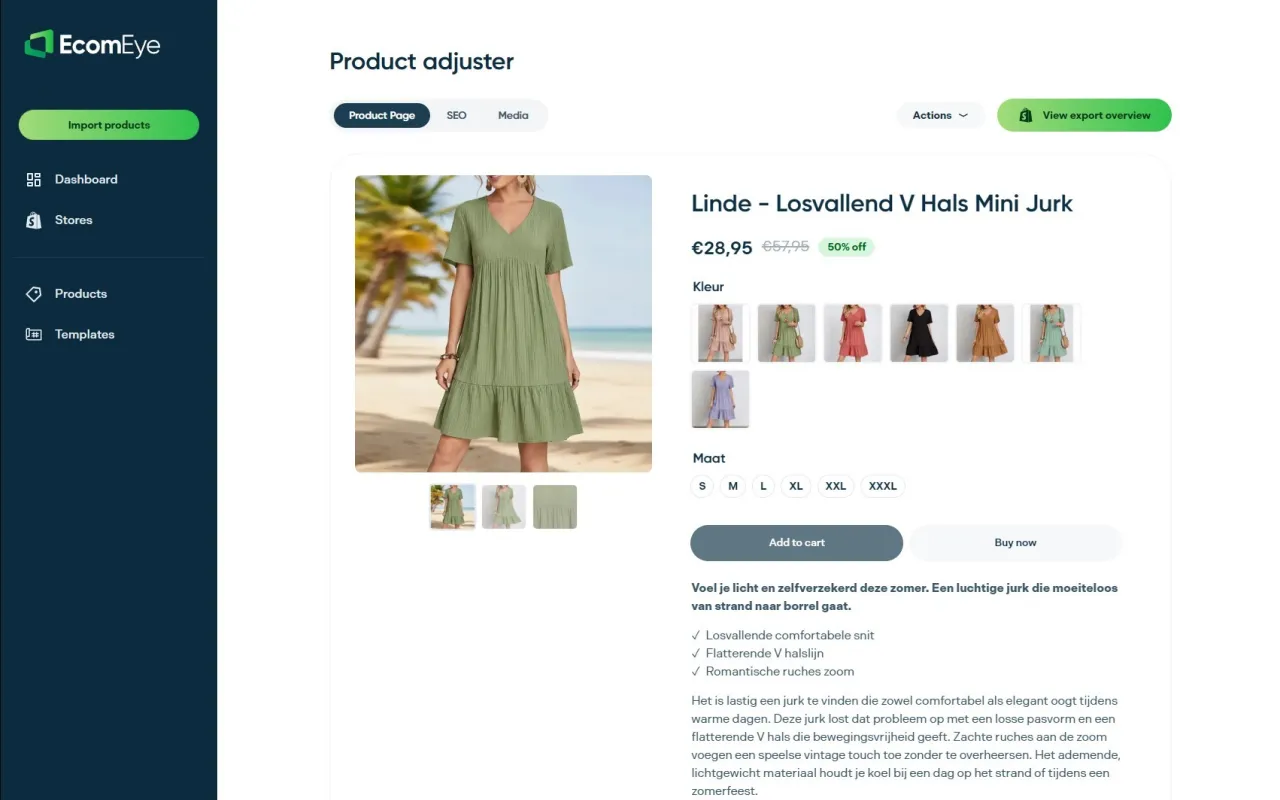
Most of the mistakes in this article share a root cause: manual processes that create errors, duplicate content that kills rankings, and product pages that are not built to convert. Ecom-eye addresses all three directly.
With Ecom-eye’s bulk AI product lister, you can import products directly from AliExpress or competitor links and automatically generate SEO-optimised titles, clean unique descriptions, and AI-created product images, then export the entire catalogue to Shopify in a single click. No copying supplier content, no duplicate content penalties, no manual rewriting. Multi-language support is built in, so scaling into new markets does not create a separate content problem.
If your store is losing ground to duplicate content, slow setup, or Google Merchant disapprovals, Ecom-eye removes those obstacles at scale. The result is product pages that rank, convert, and stay compliant from day one.
FAQ
What are the most common dropshipping mistakes beginners make?
The most common mistakes are poor niche research, choosing unreliable suppliers, copying competitor product descriptions, and running paid ads without conversion tracking. Each of these is avoidable with basic due diligence before launching.
How do shipping mistakes cause chargebacks in dropshipping?
Misaligned delivery windows across product pages, checkout, and confirmation emails create disputes when orders arrive late. Mismanaged shipping expectations account for 30% of merchant-caused chargebacks, making consistent communication across all touchpoints critical.
Does automation fix supplier reliability issues in dropshipping?
Automation reduces manual error but does not fix underlying supplier performance problems. You still need active monitoring of dispatch times, cancellation rates, and stock accuracy to catch supplier issues before they reach your customers.
Do FTC endorsement rules apply to dropshipping stores?
Yes. If you solicit reviews with discounts, work with influencers, or post incentivised testimonials, the FTC requires clear and conspicuous disclosure of those material connections. Non-compliance risks legal penalties and platform account terminations.
How do I avoid duplicate content penalties in dropshipping?
Never copy product descriptions directly from your supplier or competitor listings. Use unique, rewritten copy for every product page. AI tools like Ecom-eye can generate original, SEO-ready descriptions in bulk, removing duplicate content risk across your entire catalogue.
Ready to boost your product pages?
Generate high-converting, SEO-optimized product pages in bulk using AI automation used by e-commerce experts.
No credit card required