Product trademark risks: a practical guide for online sellers
Learn to navigate product trademark risks effectively. Protect your brand and avoid costly lawsuits with our practical guide for online sellers.

Product trademark risks: a practical guide for online sellers

TL;DR:
- Trademark risks can lead to costly legal disputes, especially if consumer confusion occurs. Protecting your brand involves conducting thorough searches, consistent branding, and documenting use to prevent infringement. Proactive strategies and early legal advice help e-commerce sellers avoid costly penalties and reputational harm.
Product trademark risks are the legal and commercial consequences that arise when a business uses a mark that may cause consumer confusion with an existing registered or unregistered trade mark. For e-commerce entrepreneurs, these risks are not theoretical. Defending a trademark lawsuit starts at £375,000, and courts can triple damages when infringement is found to be wilful. The standard courts apply is not whether marks are identical, but whether they create a likelihood of confusion in the mind of an average consumer. Understanding that distinction is the first step to protecting your store, your brand, and your income.
What is likelihood of confusion, and why does it define trademark infringement risks?
Likelihood of confusion is the central legal test in trade mark law. Courts assess whether an ordinary consumer would mistake one brand for another, or assume a connection between them. The marks do not need to be identical. Similarity in appearance, sound, or meaning is enough to trigger an infringement claim.
Courts weigh several factors when applying this test:
- Visual similarity: Do the marks look alike in font, colour, or layout?
- Phonetic similarity: Do they sound alike when spoken aloud?
- Conceptual similarity: Do they evoke the same idea or meaning?
- Relatedness of goods: Are the products sold in the same market or to the same buyers?
- Strength of the existing mark: Is the original mark distinctive and well known?
Stronger marks receive broader protection. A distinctive, invented word like “Kodak” covers a wider range of similar marks than a descriptive term like “Fresh Bread.” The more distinctive the original mark, the easier it is for its owner to win a confusion claim against you.
Evidence of actual confusion such as misdirected emails, customer complaints, or purchase errors strengthens infringement claims significantly. Courts have granted preliminary injunctions quickly when this kind of evidence is presented. That speed matters: an injunction can halt your product sales within days of a claim being filed.
Pro Tip: Before you name a product, say the name aloud and write it down. Then search for phonetically similar marks in the UK Intellectual Property Office database and the USPTO database. A five-minute check can prevent a five-figure legal bill.
How do product branding challenges create trademark exposure for e-commerce sellers?
Poor brand clarity is a direct route to legal trouble. Between 25% and 40% of new products fail due to branding issues that cause consumer confusion or unclear market positioning. That figure reflects both commercial failure and legal vulnerability: a confused consumer is exactly the evidence a trade mark owner needs to file a claim against you.
E-commerce sellers face four specific branding pitfalls:
- Copying a product line structure: Launching a range with naming conventions that mirror an established brand’s architecture creates confusion even when individual names differ.
- Selling look-alike “dupe” products: Dupe products occupy a legal grey area. They may avoid direct infringement by omitting registered marks, but they can still dilute brand distinctiveness and cause reputational harm.
- Misattributed quality: When a customer buys your product believing it comes from a well-known brand, and it does not meet their expectations, the reputational damage lands on the original brand. That brand’s legal team will notice.
- Inconsistent brand use: Using your own mark inconsistently across product pages, packaging, and social media weakens your claim to it and creates gaps that competitors or trade mark owners can exploit.
“Repeated exposure to look-alike products on social media dilutes brand distinctiveness, requiring active monitoring and layered enforcement. The brands that survive are the ones that treat their visual identity as a legal asset, not just a design choice.”
The brand differentiation principles that protect your commercial position are the same ones that protect your legal position. Distinctiveness is not just good marketing. It is a legal requirement for a defensible trade mark.
What are the legal penalties for trademark infringement?

The consequences of trade mark infringement range from costly to catastrophic. Civil remedies include injunctions that force you to stop selling, damages calculated on lost profits or a reasonable royalty, and in cases of wilful infringement, courts can award triple damages. Wilful infringement means you knew about the mark and used it anyway. Ignoring a cease-and-desist letter is the clearest way to establish wilful intent.
| Consequence | Detail |
|---|---|
| Injunction | Court order to stop selling immediately, often granted within days |
| Compensatory damages | Calculated on the trade mark owner’s lost profits or your gains |
| Triple damages | Awarded for wilful infringement; multiplies financial exposure significantly |
| Forced rebranding | All product pages, packaging, and marketing materials must change |
| Criminal penalties | Up to 10 years imprisonment and $2 million in fines for counterfeiting |
Criminal penalties apply specifically to counterfeiting, which involves deliberately copying a registered mark on goods. The Department of Justice prosecutes these cases, and first offences carry sentences of up to 10 years. That is not a risk most small business owners consider when sourcing products from overseas suppliers, but it is a real one.
Ignoring early warning signs such as informal outreach from a brand owner or platform takedown notices can be construed as wilful infringement. That single decision, to ignore rather than respond, can transform a manageable dispute into a six-figure legal liability.
Pro Tip: If you receive a cease-and-desist letter, do not reply without legal advice. Acknowledge receipt, pause the activity in question, and consult a trade mark solicitor before making any admission or counter-claim.
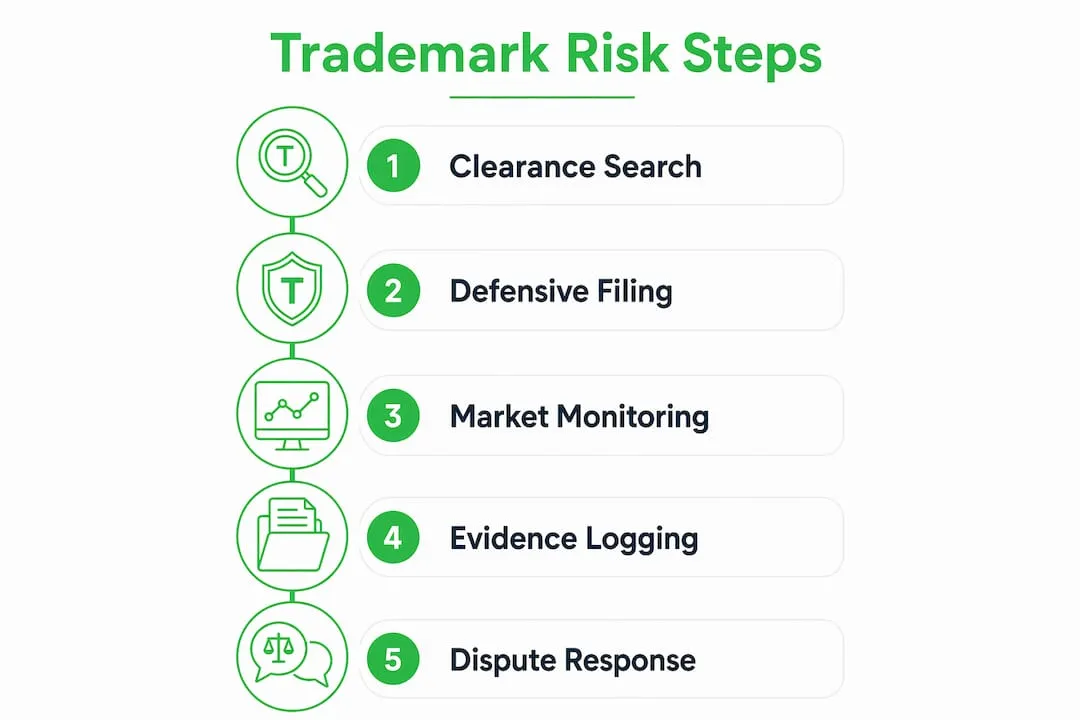
What trademark protection strategies actually work for online sellers?
Proactive risk management costs a fraction of reactive litigation. The following strategies address the most common points of failure for e-commerce sellers.
Conduct a clearance search before launch
A comprehensive clearance search checks registered marks, pending applications, and common law rights in every market where you plan to sell. Search the UK Intellectual Property Office, the European Union Intellectual Property Office (EUIPO), and the USPTO if you sell into the United States. Do not rely on a basic Google search. Identical results do not mean you are clear; phonetically or conceptually similar marks in related product categories can still block you.
File defensively when manufacturing overseas
When manufacturing overseas, third parties in the manufacturing country may register your brand name before you do, then use that registration to block your exports or demand payment. Defensive filings in the country of manufacture protect your supply chain. This applies to any mark that appears on your goods or packaging, not just your primary brand name.
Monitor marketplaces and social media
Repeated exposure to look-alike products on social media dilutes your brand’s distinctiveness. Set up monitoring for your brand name, product names, and visual assets across Amazon, eBay, TikTok Shop, and Instagram. Many platforms offer brand registry programmes that allow faster takedowns. The Amazon trademark policy for sellers in 2026 requires registration in Amazon Brand Registry to access the most effective enforcement tools.
Maintain evidence of use
Trademark rights arise from use in commerce that functions as a source identifier. Many small business owners mistakenly believe that manufacturing rights equal trade mark rights. They do not. Rights arise from consistent, documented use of a mark in the market. Keep dated records of product listings, packaging, invoices, and marketing materials. This evidence is your first line of defence if your rights are ever challenged.
Pro Tip: Create a simple brand use log: a dated folder of screenshots showing your mark on live product pages, packaging photos, and customer invoices. Update it monthly. If you ever need to prove first use in commerce, this folder is your evidence.
Respond to disputes strategically
Trademark infringement litigation often follows building conflicts rather than sudden events. A measured, legal response to early signals controls costs and preserves options. Avoid public disputes on social media. Do not make admissions in writing. Engage a trade mark solicitor early, because the cost of early advice is always lower than the cost of late defence.
Understanding copyright risks in e-commerce sits alongside trade mark risk management. The two areas overlap frequently in product page content, images, and brand assets.
Key takeaways
Managing product trademark risks requires proactive clearance, consistent brand use, and a measured legal response to early dispute signals.
| Point | Details |
|---|---|
| Likelihood of confusion is the legal test | Marks do not need to be identical; similarity in sound, look, or meaning is enough to infringe. |
| Wilful infringement multiplies costs | Ignoring cease-and-desist letters can trigger triple damages and criminal exposure. |
| Dupe products carry hidden risk | Look-alike products may avoid direct infringement but still dilute brand distinctiveness and invite legal action. |
| Overseas manufacturing needs defensive filings | Third parties can register your mark in the manufacturing country and block your exports. |
| Evidence of use is your legal foundation | Dated records of brand use in commerce are the primary proof of trade mark ownership. |
The mistake I see most often with trademark risk in e-commerce
Most e-commerce sellers I have observed treat trade mark risk as someone else’s problem. They assume that because they sourced a product legally from a supplier, they are protected. They are not. The earliest user in commerce holds the strongest claim regardless of a later user’s market prominence or fame. Your supplier’s paperwork does not transfer trade mark rights to you.
The second mistake is treating a cease-and-desist letter as an opening negotiation rather than a legal warning. Sellers reply defensively, make admissions, or post about it publicly. All three responses increase legal exposure. The correct response is silence, followed by legal advice.
What actually works is boring but effective: clear the name before you launch, file defensively if you manufacture abroad, monitor your brand consistently, and keep records. The sellers who avoid costly disputes are not the ones with the best lawyers on speed dial. They are the ones who never needed them because they did the groundwork first. The branding principles behind e-commerce growth and the legal principles behind trade mark protection are the same: be distinctive, be consistent, and be first.
— Koen
How Ecom-eye helps sellers avoid copyright and trademark pitfalls
Copying product pages from suppliers or competitors is one of the fastest ways to accumulate both copyright and trade mark risk. Duplicate content, lifted descriptions, and reused images all create legal exposure before your store makes its first sale.
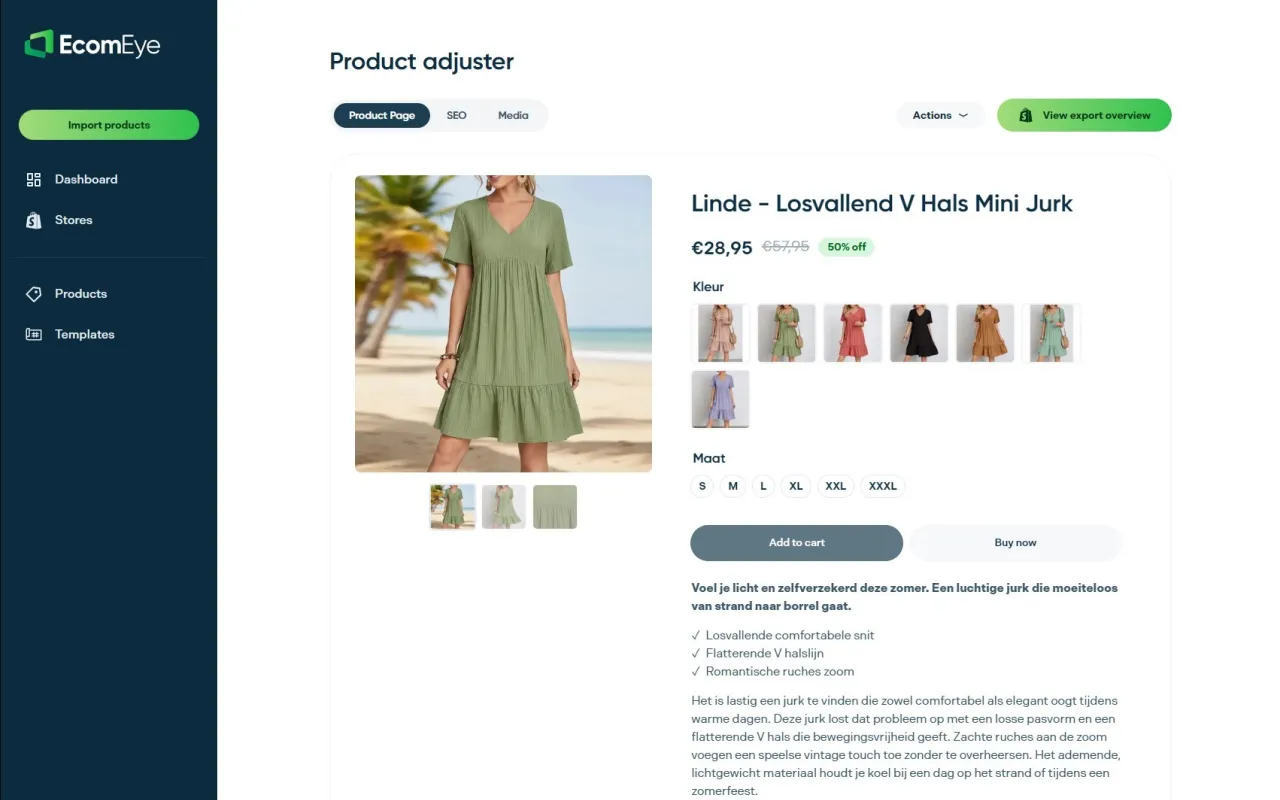
Ecom-eye generates original, SEO-ready product pages in bulk directly from AliExpress imports or competitor links. Every title, description, and AI-generated product image is created fresh, removing the copyright risk that comes with copied content. Sellers can export clean, original pages to Shopify in one click, with no rewriting and no manual work. For sellers building a distinctive brand from the ground up, starting with original content is the foundation that trade mark protection requires. Visit Ecom-eye to see how it works for your store.
FAQ
What is the likelihood of confusion test in trade mark law?
Likelihood of confusion is the legal standard courts use to assess trade mark infringement. It measures whether an average consumer would mistake one mark for another, based on visual, phonetic, and conceptual similarity, as well as the relatedness of the goods.
Can I sell look-alike products without infringing a trade mark?
Look-alike or dupe products occupy a legal grey area. Omitting a registered mark may avoid direct infringement, but selling products that dilute a brand’s distinctiveness or mislead consumers can still result in legal action and reputational harm.
What should I do if I receive a cease-and-desist letter?
Do not reply without legal advice. Acknowledge receipt, pause the activity in question, and consult a trade mark solicitor before making any written response or admission.
Do I need to register a trade mark to have rights?
Registration strengthens your position significantly, but unregistered rights can arise from consistent use in commerce. The earliest user in commerce generally holds the strongest claim, making documented evidence of use critical.
Why do I need a defensive trade mark filing if I manufacture overseas?
Third parties in manufacturing countries such as China can register your brand name locally and use that registration to block your exports or demand payment. Defensive filings in the country of manufacture protect your supply chain before a dispute arises.
Ready to boost your product pages?
Generate high-converting, SEO-optimized product pages in bulk using AI automation used by e-commerce experts.
No credit card required