Why optimize product titles: the e-commerce growth case
Discover why optimize product titles is crucial for e-commerce success. Improve visibility, drive clicks, and boost sales with effective titles.

Why optimize product titles: the e-commerce growth case

TL;DR:
- Optimized product titles improve search rankings, increase click-through rates, and drive more sales for e-commerce stores.
- They prioritize clarity, relevant keywords, and platform-specific structures to maximize visibility and relevance across channels.
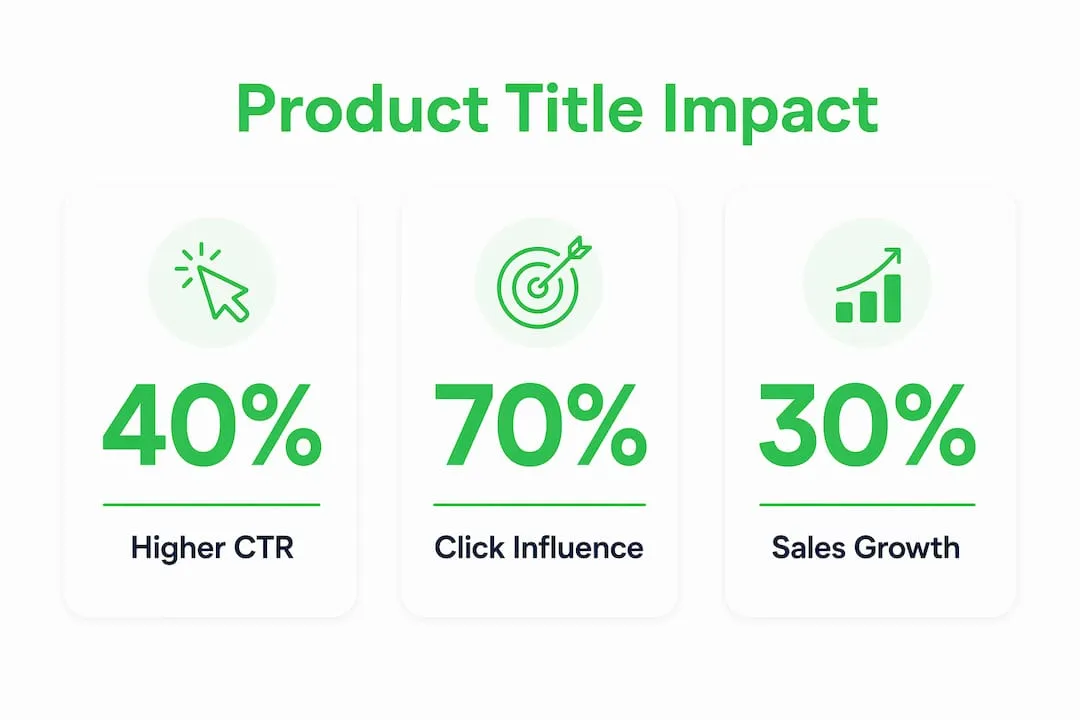
Product title optimisation is the practice of structuring and wording a product’s name to match what shoppers search for, satisfy platform algorithms, and drive clicks that convert. The reason to prioritise it is straightforward: 51% of shoppers identify the product title as the most important element for completing a purchase, and 70% decide whether to click based on the title alone. That single data point reframes the title from a label into a sales tool. For e-commerce entrepreneurs running Shopify dropshipping stores, understanding why optimise product titles is not optional. It is the difference between a product that ranks and sells, and one that sits invisible in a crowded catalogue.
Why do optimised product titles increase visibility and clicks?
The direct answer is that search engines and marketplace algorithms treat the product title as the primary signal for relevance. When your title matches a shopper’s query, the algorithm rewards you with a higher position. When it does not match, you lose that placement to a competitor whose title does.
Optimised product titles can drive a 20%–40% increase in click-through rates. A single title refinement can lift CTR by 10%–25% without changing any other element on the page. That is a significant return for what is often a five-minute edit.
Keyword placement within the title matters as much as keyword choice. Placing primary keywords within the first 30 characters correlates with higher CTR on mobile, where truncation cuts titles short. Google also rewrites search result titles in about 60% of cases when title tags do not align with page content. Writing a title that matches your page prevents Google from substituting its own version, which rarely converts as well as a crafted original.
The benefits of product title optimisation compound across a catalogue:
- Higher organic ranking on Google, Google Shopping, and marketplace search results
- Improved ad relevance scores, which lower cost-per-click in paid campaigns
- Greater mobile visibility, because front-loaded keywords survive truncation
- Reduced bounce rate, because shoppers who click already know what they are getting
- Better feed matching in Google Shopping, where attribute-rich titles win placement
Small incremental improvements across hundreds of products compound into significant traffic and sales uplift. A store with 500 products that improves average CTR by even 15% across the catalogue sees a material change in monthly revenue.
What makes a product title optimised?
A well-structured product title follows a clear formula. The core components are: brand name, product type, key features, and variant attributes such as colour, size, or material. The order of these components changes depending on the platform, but the components themselves remain constant.

Front-loading is the most important structural decision. Shoppers remember items at the beginning and end of a sequence, a cognitive pattern known as the serial position effect. Placing your highest-value keyword at the start of the title exploits this effect. It also protects visibility on mobile, where titles are cut to roughly 60 characters in most search results.
The most common title mistake is not keyword stuffing. It is forcing shoppers to interpret what the product is. A title like “Premium Quality XL Blue” tells a shopper nothing. A title like “Men’s Waterproof Running Jacket, Blue, XL” answers the question immediately. High-performing titles prioritise clarity and scannability above all else.
Practical formatting rules that improve performance:
- Use numerals instead of words for sizes and quantities (“500ml” not “five hundred millilitres”)
- Separate attributes with commas or pipes rather than run-on phrasing
- Keep titles between 60 and 150 characters depending on the platform
- Avoid ALL CAPS, which reads as shouting and reduces trust
- Do not include promotional language such as “Best” or “Cheap” in the title itself
Pro Tip: Write your title as if you are answering a specific search query. Ask yourself: “If a shopper typed this into Google right now, would my title appear to answer their question?” If the answer is no, rewrite it.
Consistent formatting of product titles across a store also enhances trust and improves search indexing. A catalogue where every title follows the same structure signals professionalism to both shoppers and algorithms.
How do title strategies differ by platform?
Each platform rewards a different title structure, and a single universal title underperforms on most of them. Amazon prefers keyword-first titles, Shopify performs better with brand-first or benefit-led titles, and Etsy rewards descriptor-stacked titles that mirror the language of handmade and niche searches.
Google Shopping feed titles differ from product detail page titles. Feed titles are attribute-heavy because the algorithm matches them to shopping queries by parsing specific attributes. Detail page titles focus on SERP visibility and compelling copy that earns the click. Treating them as identical is a common and costly error.
| Platform | Preferred structure | Character limit | Priority signal |
|---|---|---|---|
| Amazon | Keyword-first, attribute-rich | 200 characters | Search relevance |
| Google Shopping | Attribute-heavy, brand secondary | 150 characters | Feed matching |
| Shopify | Brand-first or benefit-led | 70 characters (SERP) | Shopper clarity |
| eBay | Descriptor-stacked, no brand required | 80 characters | Keyword density |
| Etsy | Descriptor-stacked, niche phrasing | 140 characters | Long-tail match |
The practical implication is that stores selling across multiple platforms need platform-specific title variants. Exporting the same title to every channel leaves ranking potential on the table. SEO metadata strategies for Shopify, for instance, require a different approach than feed optimisation for Google Shopping.
Pro Tip: Create a master title template for each platform and store it in a spreadsheet. When you add a new product, fill in the template for each channel rather than writing one title and copying it everywhere.
What are the most common product title mistakes?
The most damaging mistakes in product title optimisation are predictable, and most stores make at least two of them.
Keyword stuffing harms readability and shopper trust. Excess keywords belong in backend search fields, not in the visible title. A title crammed with synonyms reads as spam and reduces conversion even when it ranks. Effective titles prioritise accuracy and clarity, with one or two primary keywords placed naturally.
Placing a brand name in the first 30+ characters of a deep product page wastes prime title space that should hold high-value keywords. Brand recognition matters, but on a product page, the shopper already knows they are on your store. The first characters should answer “what is this product?” not “who sells it?”
Other frequent errors include:
- Adding SKU codes or internal reference numbers to the visible title
- Using technical jargon that shoppers do not search for
- Neglecting to update titles after seasonal shifts or algorithm changes
- Applying the same title to product variants instead of specifying the variant in the title
Pro Tip: Treat every product title as a mini advertisement. It must communicate the product type, the key benefit or feature, and the variant in under 80 characters. If it cannot do all three, cut the weakest element.
Consistency matters as much as individual title quality. A store where some titles follow a clear formula and others do not signals inconsistency to both shoppers and search engines. Regular audits, at minimum quarterly, catch drift before it compounds into ranking losses.
How do you implement and test title optimisations?
Testing is what separates guesswork from a repeatable system. The process follows four steps.
- Audit your current titles. Export your product catalogue and score each title against the formula for your primary platform. Flag titles that lack the product type, front-loaded keywords, or variant attributes.
- Generate variants. Write two or three alternative titles for your highest-traffic products. Use different keyword placements, attribute orders, or benefit-led phrasing to create genuine variation.
- Run A/B or multivariate tests. On Shopify, you can rotate title variants using built-in tools or third-party apps. On Google Shopping, test feed title variants through Google Merchant Centre experiments. Run each variant for at least two weeks to gather statistically meaningful data.
- Interpret CTR and conversion data. CTR tells you which title earns the click. Conversion rate tells you which title sets accurate expectations. The winning title does both. Testing multiple title variants and using performance data to drive decisions ensures continuous improvement as platform algorithms evolve.
Schedule audits around seasonal peaks and any major platform algorithm updates. A title that performs well in january may underperform in november when search behaviour shifts toward gift-giving queries. LSI keywords and related terms in your titles also help capture seasonal query variations without rewriting the entire title.
Key takeaways
Product title optimisation is the highest-leverage, lowest-cost change an e-commerce store can make to improve visibility, click-through rates, and sales simultaneously.
| Point | Details |
|---|---|
| Titles drive purchase decisions | 70% of shoppers decide to click based on the title alone, making it the most critical product element. |
| Front-load primary keywords | Place the most important keyword within the first 30–60 characters to protect mobile visibility and CTR. |
| Platform structures differ | Amazon rewards keyword-first titles; Shopify favours brand-first; Google Shopping needs attribute-heavy feed titles. |
| Avoid stuffing and jargon | Clarity and scannability outperform keyword density; move excess terms to backend search fields. |
| Test and audit regularly | Run title variants, measure CTR and conversion, and schedule quarterly audits to maintain performance. |
Titles are the most underrated lever in e-commerce
Most e-commerce entrepreneurs I speak with spend weeks on product photography and hours on ad copy, then copy a supplier’s title word for word. That is the wrong order of priority. The title is the first thing a search engine reads and the first thing a shopper sees. Everything else is secondary.
What I find consistently true is that descriptive product titles do more than improve rankings. They reduce returns, because shoppers who understand exactly what they are buying before they click are less likely to be disappointed when the product arrives. That is a downstream benefit most guides ignore.
The mobile-first reality makes this more urgent than it was five years ago. Titles truncate aggressively on mobile screens. If your keyword is in position four of the title, a mobile shopper may never see it. The stores winning on Google Shopping in 2026 are the ones that treat the first 60 characters as the entire title and treat everything after as a bonus.
My honest view is that manual title optimisation at scale is not sustainable. A store with 200 products cannot realistically maintain platform-specific, tested, and seasonally updated titles without automation. The entrepreneurs who grow fastest are the ones who build a system for title generation and testing, rather than editing titles one by one when sales drop.
— Koen
How Ecom-eye generates optimised titles at scale
Rewriting product titles one by one is the bottleneck that keeps most Shopify dropshipping stores stuck at the same revenue level.
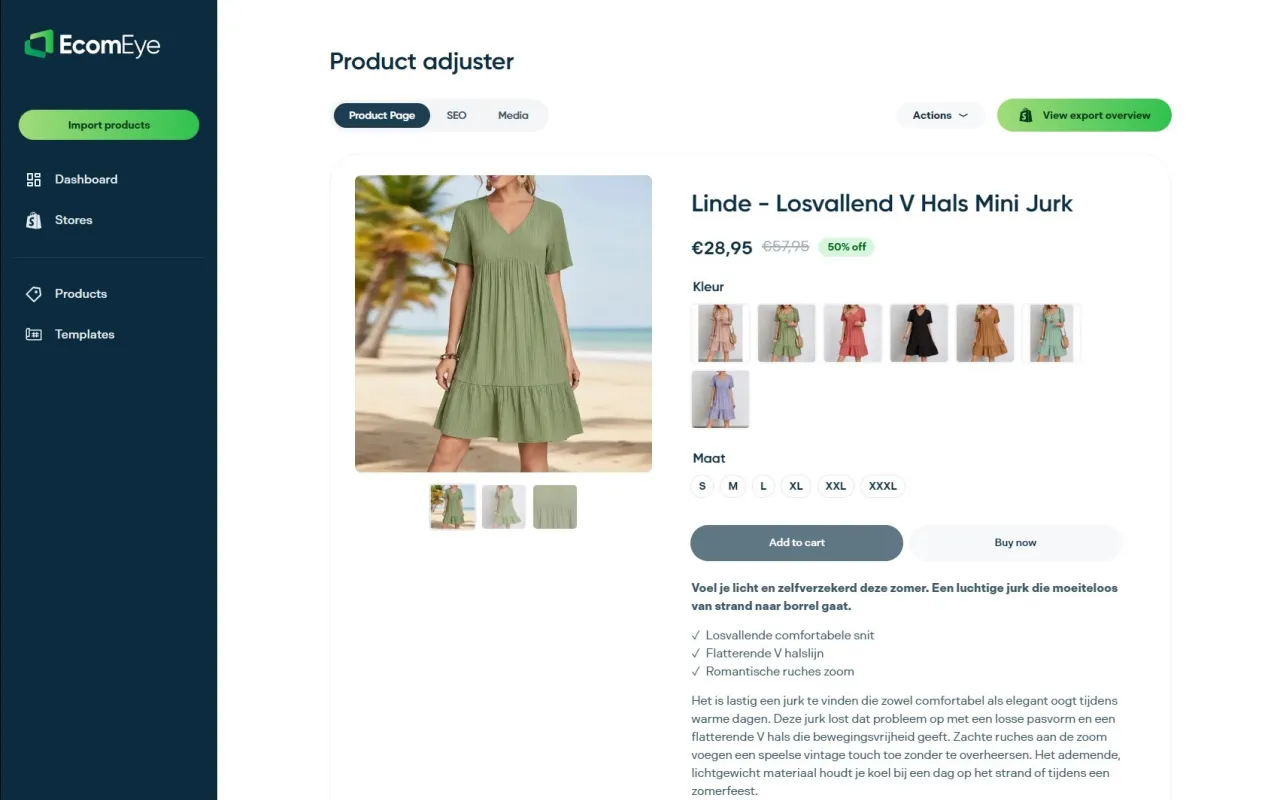
Ecom-eye generates SEO-ready product titles in bulk, directly from AliExpress imports or competitor links. The AI produces titles built for Google Shopping, Shopify, and organic search, without duplicate content or copyright risk. Every title is structured to front-load the right keywords, match platform character limits, and pass Google Merchant Centre review. Stores that previously spent days rewriting supplier titles can now generate product pages for an entire catalogue in minutes, then export directly to Shopify in one click.
FAQ
Why do product titles matter for SEO?
Product titles are the primary relevance signal that search engines and marketplace algorithms use to match products to queries. A title that contains the right keywords in the right order ranks higher and earns more clicks.
How long should an optimised product title be?
The ideal length depends on the platform: 60–150 characters covers most cases, with the first 30–60 characters carrying the most weight for mobile visibility and algorithm matching.
Does keyword stuffing in titles help rankings?
Keyword stuffing harms both readability and shopper trust, and most platforms penalise it. Effective titles use one or two primary keywords placed naturally, with additional terms moved to backend search fields.
Should I use the same title across all platforms?
Each platform rewards a different title structure, so a single title underperforms on most channels. Amazon favours keyword-first titles, while Shopify and Google Shopping each require a different approach.
How often should I update my product titles?
Audit titles at least quarterly, and review them after major platform algorithm updates or seasonal shifts in search behaviour. Regular updates prevent ranking drift as shopper query patterns change.
Ready to boost your product pages?
Generate high-converting, SEO-optimized product pages in bulk using AI automation used by e-commerce experts.
No credit card required