Top 6 Ecombotics.com Alternatives 2026
Explore 6 ecombotics.com alternatives to help you choose the right platform for optimising product listings and enhancing SEO performance.

Top 6 Ecombotics.com Alternatives 2026

Publishing large numbers of Shopify product pages quickly with brand consistency is slow and repetitive. Most tools either lock key features to expensive high-volume plans or require manual steps for exports and image compliance. You can choose a Shopify product page generator that fits your catalogue size, automation needs, and budget without platform or workflow lock-in.
Table of Contents
EcomEye
At a Glance
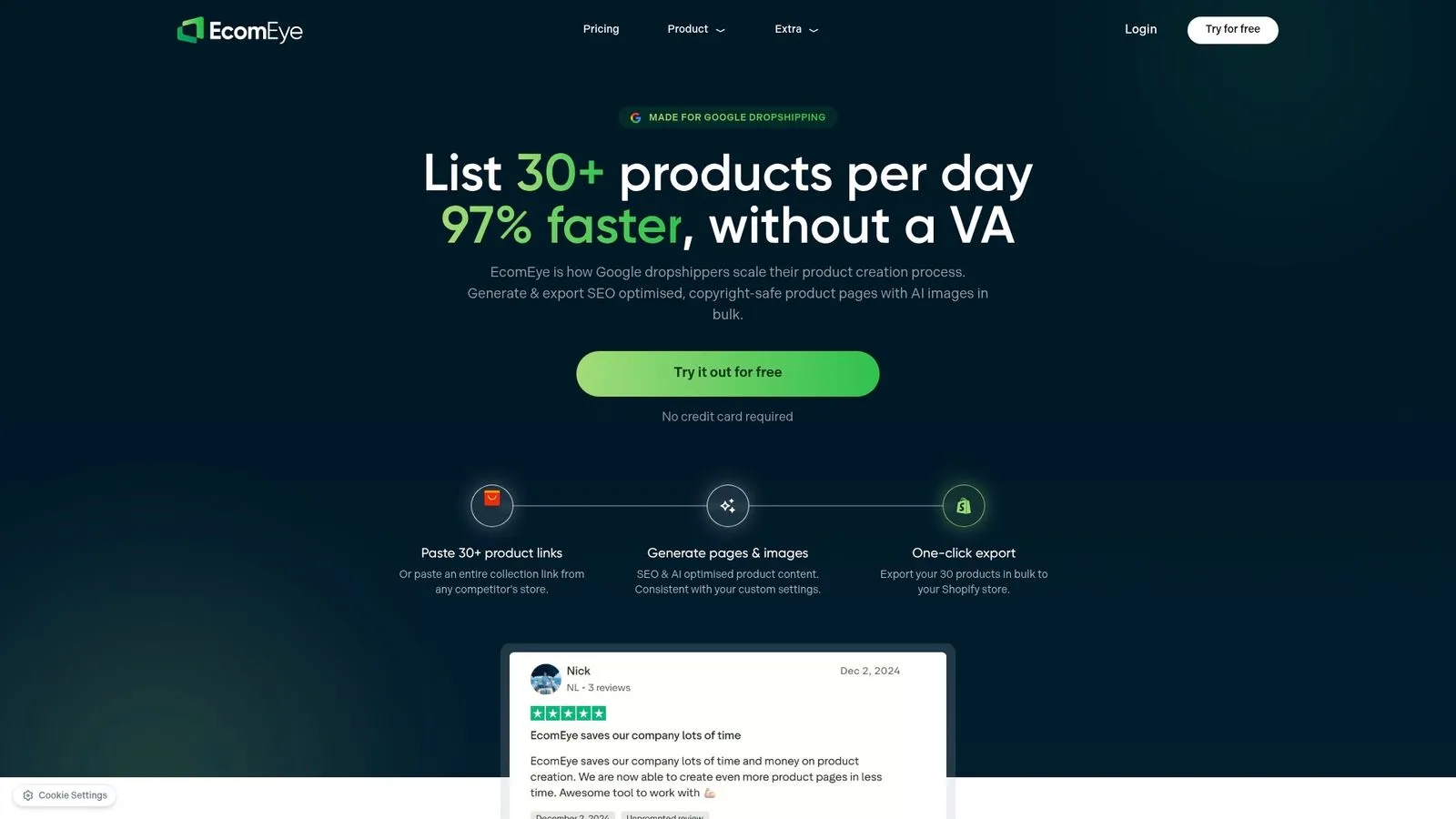
EcomEye’s marketing materials state it can generate 30+ product pages per day from supplier links. That claim targets Shopify dropshippers who list large catalogues. The tool bundles descriptions, meta fields and AI images so you can publish listings fast.
Core Features
EcomEye imports supplier and competitor links in bulk from AliExpress, Amazon, Shopify and Temu and then creates SEO-ready product pages. The workflow produces clean descriptions, template-based metafields and multi-language listings, and the platform includes studio-quality AI image generation. A built-in editor and one-click export push completed pages straight to Shopify.
Key Differentiator
The platform focuses on bulk creation with copyright-safe outputs. It pairs generated product copy with DMCA-safe AI images and maintains consistent templates and metafields for each listing. The export path goes directly into Shopify, which removes the usual manual export and reformatting step.
Pros
EcomEye converts supplier links into complete Shopify listings quickly, cutting the hands-on time required for each SKU. Templates keep titles, descriptions and metafields consistent across a catalogue, which helps with manual review and Google Merchant uploads. The copyright-safe image generation reduces reuse risk from scraped assets and keeps listings compliant with DMCA concerns. Multi-language support makes it practical for stores selling to several markets.
Cons
- Limited to Shopify only; there is no native support for other storefront platforms.
Notable Integrations
- Shopify
Who It’s For
This tool fits Shopify store owners and dropshippers who must publish large numbers of product pages and who want automated SEO copy and images. It suits merchants replacing manual listing work or virtual assistants when speed and catalogue consistency matter.
Unique Value Proposition
Exports completed listings directly to Shopify while producing consistent metafields and studio-style images alongside SEO-optimised copy. That workflow reduces the manual steps between product discovery and a live store page. For stores adding hundreds of SKUs, the one-click export and template system change how fast new products reach the shop front.
Real World Use Case
A dropshipper uploads thirty supplier links each morning and runs a bulk generation job. The system returns finished pages with images, meta titles and descriptions. The operator reviews a handful of edits and exports everything to Shopify, cutting what was days of VA work into a single hour.
Pricing
The vendor advertises a starting tier at €225/month for high-volume product page creation and a higher tier at €513/month for large image batches. The plans are described as flexible with volume discounts and a pay-per-item option. That price positioning reflects the platform focus on automation and bulk throughput.
Website: https://ecom-eye.com
PagePilot.ai
At a Glance
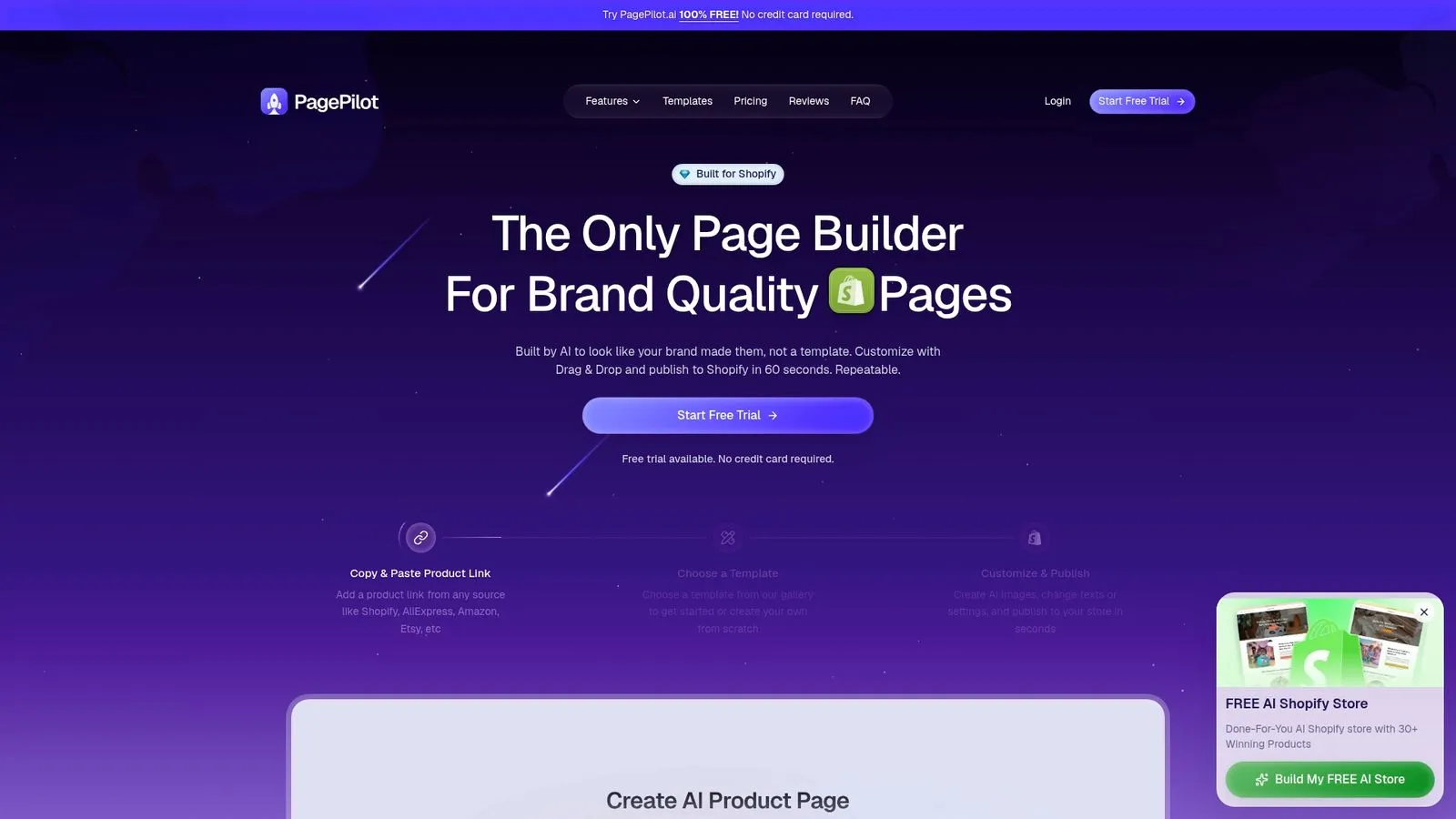
According to the company, merchants can launch a full Shopify store in two minutes using PagePilot.ai. The product generates AI generated product pages, images, descriptions and ad creative from a single product URL. It supports 30+ languages and is free to try with no credit card needed.
Core Features
PagePilot.ai turns any product URL into a ready product page and pairs that with a drag and drop page builder compatible with all Shopify themes. The platform produces AI generated images, descriptions and ad copy while supporting multiple stores and many languages. A customisable cart drawer adds upsells and timers to nudge conversions on product pages.
Key Differentiator
PagePilot.ai centres on AI driven storefront and product page creation that integrates directly with Shopify and supports multiple languages. That focus makes it faster to produce branded stores for non English markets. The combination of bulk generation and theme compatibility targets merchants who need volume plus a branded look.
Pros
Fast setup and AI automation cut manual copywriting and image work when you publish dozens of pages. Templates modelled on popular brands help you keep a consistent branded look while the drag and drop editor lets you adjust layouts within your existing Shopify theme. Multi store and multi language support suit merchants who scale across countries or run several niche stores.
Cons
- Theme compatibility can be inconsistent, requiring support or manual tweaks for some Shopify themes.
- Reliance on AI for copy and images means you will often need manual edits to match a specific brand voice precisely.
- Subscription pricing may be costly for very small single product shops.
When It May Not Fit
If you run a micro store with a tight budget the subscription starting at $39/month is likely too costly. Shops that require heavy custom functionality beyond templates will need bespoke development outside the builder. Non Shopify stores cannot use this product, so platform lock in is a real constraint.
Who It’s For
Shopify store owners, dropshippers and ecommerce marketers who want to produce branded product pages rapidly will find PagePilot.ai useful. Agencies managing several client stores will appreciate multi store and bulk generation features. Merchants selling into multiple language markets benefit from the language support and templates.
Real World Use Case
A dropshipping entrepreneur imports URLs for 30 products, generates AI images and descriptions, then publishes SEO optimised product pages using templates and bulk tools. The process cuts hours of manual setup when populating a new store. If that claim holds, the published store can be live in minutes rather than days.
Pricing
A free trial is available with no credit card required. Paid plans start at $39/month, and higher tiers add unlimited product pages and connections to multiple stores. The vendor advertises scalable plans for solo merchants up to agencies managing many stores.
Website: https://pagepilot.ai
D2C Bot
At a Glance
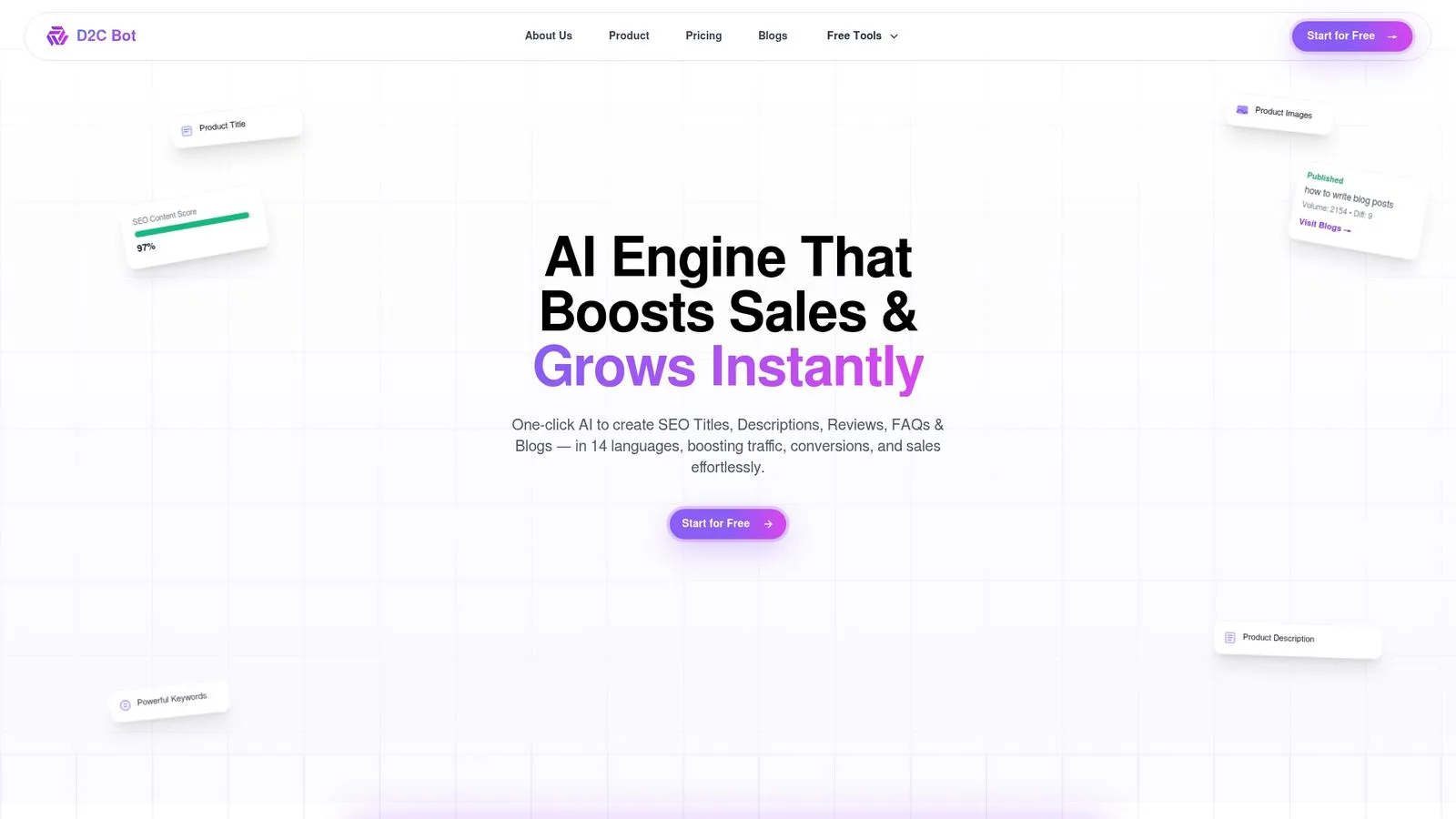
D2C Bot reports AI content generation in 2.5 seconds. That speed covers titles, descriptions, FAQs, reviews, blogs and images for Shopify product pages. The platform also claims support for 14+ languages and bulk processing to tackle large catalog updates.
Core Features
The tool produces SEO optimized product copy, FAQs, customer review drafts and blog posts alongside AI generated images, all from a single interface. It offers native Shopify integration and bulk processing so you can push content to many SKUs at once. Multi language output lets you localise pages for regional markets without separate translation tools.
Key Differentiator
D2C Bot’s main edge is the combination of reported generation speed and direct Shopify integration. That pair lets merchants create and publish content rapidly without exporting and reimporting CSVs. For stores that need fast, repeated updates across many listings, this removes a common bottleneck.
Pros
High speed generation reduces content backlog and helps you publish product changes faster than manual copywriting. The native Shopify integration keeps your catalogue in sync and avoids double work when you update product details. Multi language support, including regional languages, helps you test new markets without hiring translators. The platform replaces several point tools by handling copy, images and FAQs from one place.
Cons
-
Occasional mismatches in tone or factual detail; the vendor advertises accuracy over 95% so expect some manual edits.
-
Dependence on AI quality for specialised technical or highly branded copy can cause extra review time.
-
Integrations list shows only Shopify, which limits use if your store runs on another platform.
-
The public material does not fully list edge case limitations or moderation tools.
When It May Not Fit
If you run a non Shopify storefront the native integration will not help and you will need an alternative publishing workflow. Teams that require guaranteed editorial accuracy without any human review will find the AI output requires oversight. Large enterprises seeking detailed governance, audit trails or many custom integrations should confirm those capabilities before committing.
Notable Integrations
D2C Bot integrates with Shopify as its native publishing target. That integration handles automatic catalog sync and direct content push from the D2C Bot interface to product pages.
Who It’s For
Shopify merchants, small marketing teams and e-commerce entrepreneurs who need to produce large volumes of product content quickly will get most value. It suits stores that frequently add SKUs, localise product pages, or run seasonal catalog refreshes.
Real World Use Case
A Shopify owner uses D2C Bot to generate descriptions, images and review content across 1,000 SKUs and to localise top sellers into several languages. The owner reduced manual copy hours and sped up promotional launches by publishing directly from the app to the store.
Pricing
Pricing starts at $9/month for a Starter plan that includes 150 AI credits. Higher tier plans with larger credit bundles are available, according to the vendor.
Website: https://d2cbot.com
TextBrew
At a Glance
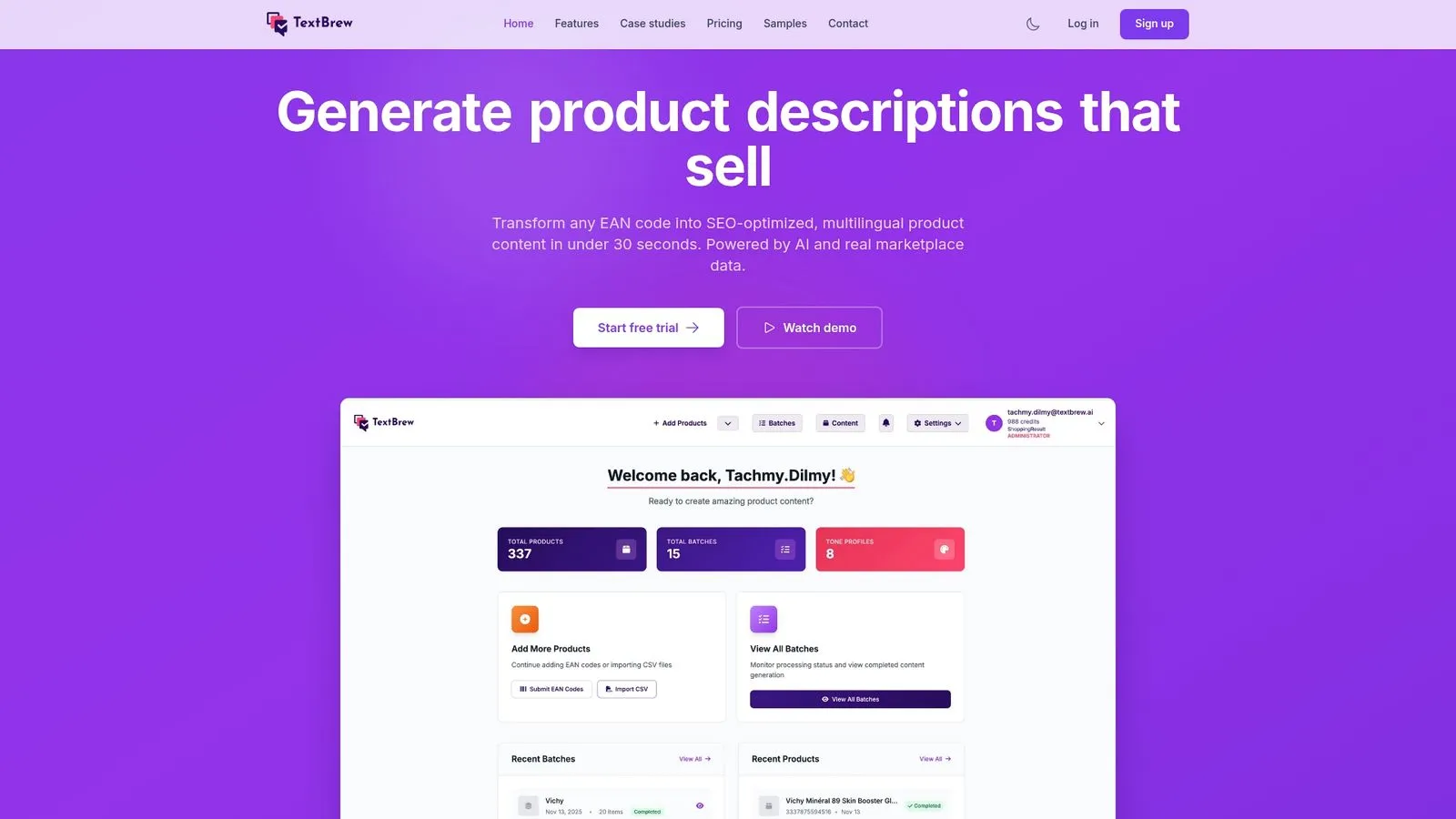
Consolidates data from five sources to turn an EAN barcode into a full product page ready for search engines and marketplaces. The platform auto-generates titles, descriptions, specs, meta text, pros and cons, and reviews in multiple languages. Its output respects a brand’s chosen tone of voice and supports batch processing for large uploads.
Core Features
TextBrew aggregates product data from multiple sources and uses that input to create AI generated SEO optimised content at scale. It offers customisable tone of voice profiles and supports batch processing and bulk upload for catalogue work. The platform exposes an API and includes white label options for agencies and retailers.
Key Differentiator
The standout is the combination of multi source aggregation with tailored, brand-level tone profiles. That mix delivers product pages that read consistently across markets while drawing on distinct data points for accuracy. For sellers who map thousands of barcodes, this approach reduces repetitive manual writing.
Pros
TextBrew automates and speeds up product description generation, which saves time when you onboard many SKUs. It supports multiple languages and localised content, letting you keep listings coherent across regions. The API and white label options let agencies embed content generation into existing workflows and rebrand output for clients.
Cons
- Reliance on AI generated content means output can require human review for technical accuracy and legal claims.
- Pricing details are not listed in the scraped content, so you must visit the vendor site for plan specifics.
- Some advanced features and integrations may need onboarding support for teams new to automated content.
- Limited public information on enterprise scalability for very large catalogues could complicate procurement decisions.
When It May Not Fit
If you need guaranteed human edited copy for regulated products, this automated workflow may not match your compliance needs. Organisations with extremely large real time catalogues should verify scalability directly with the vendor. Small sellers who prefer manual control over every description will find the automation excessive.
Notable Integrations
- REST API for programmatic access.
- Webhook notifications for workflow events.
- OAuth/JWT authentication for secure connections.
Who It’s For
E-commerce brands, marketing agencies, and retailers that need faster product content and consistent tone across markets. Teams that manage inventory by barcode and want bulk content creation will benefit most. Agencies offering white label content services will find the platform useful for client delivery.
Real World Use Case
A large online retailer scans thousands of new arrivals by EAN and runs them through TextBrew in bulk. The platform returns SEO optimised titles and descriptions in local languages, letting the retailer publish at scale while keeping a single brand voice.
Pricing
See website for detailed plans and pricing tiers. Public material does not list specific monthly rates or enterprise pricing bands, so contact sales for custom quotes and volume discounts.
Website: https://textbrew.ai
UPPIFY
At a Glance
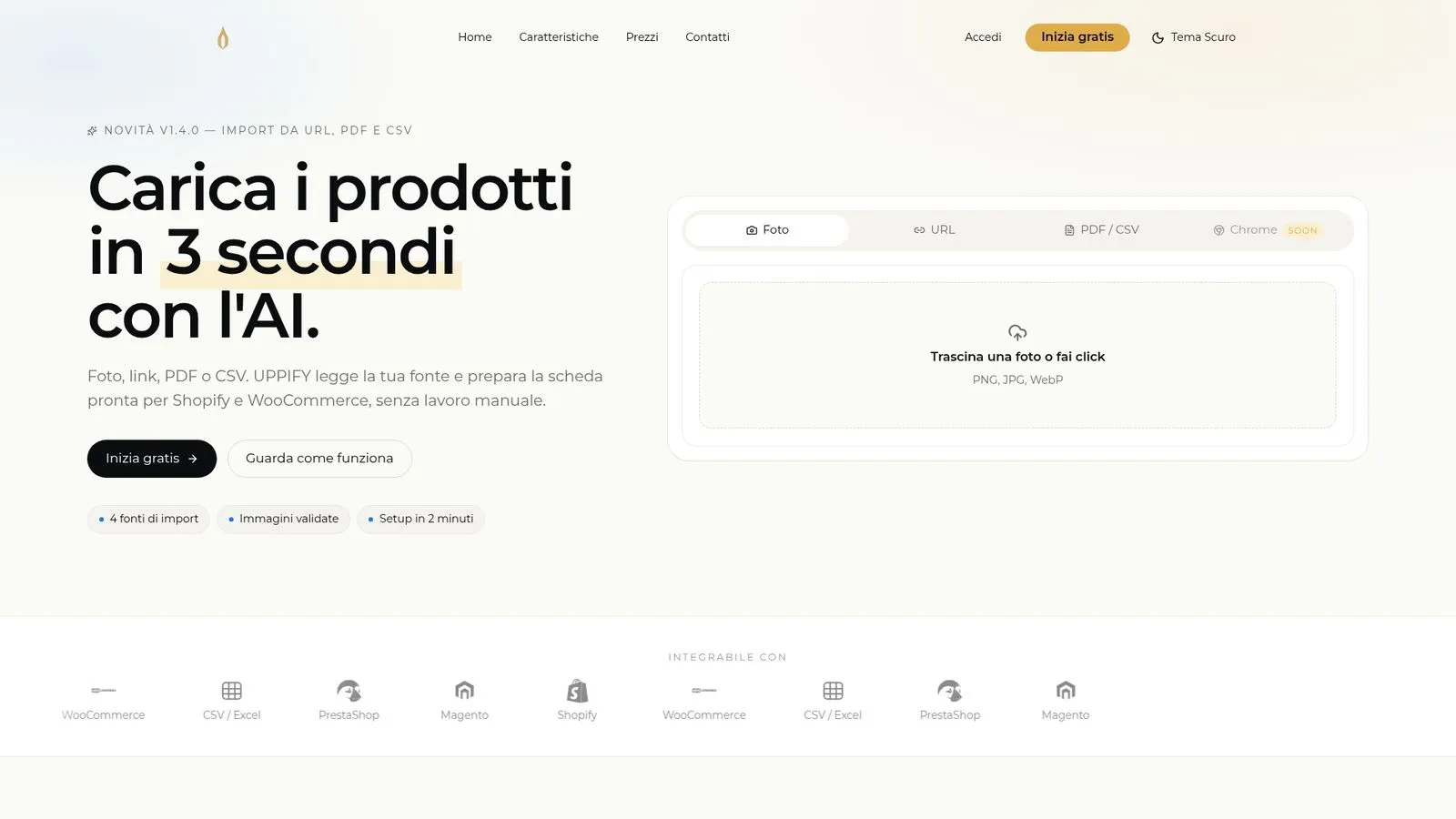
According to the company, UPPIFY offers a free base plan and paid tiers starting at €29/month. The vendor advertises that its AI cuts product publication from hours to seconds. It imports from URLs, PDFs, CSV, and Excel, and connects directly to major store platforms. That combination aims to suit teams managing growing catalogues and frequent SKU updates.
Core Features
Automatic generation of titles, descriptions, tags, and meta SEO fields reduces manual copy work and keeps listing fields consistent. The platform accepts imports from links, PDF files, CSV, and Excel and runs automatic image validation to flag issues. Direct connectors to Shopify, WooCommerce, PrestaShop, and Magento handle variant mapping and category alignment for marketplaces.
Key Differentiator
UPPIFY automates the full workflow from content creation to upload, not just single steps in the process. It pairs bulk import tools with variant management and direct platform sync, which reduces handoffs between tools. Because of that speed claim, teams can publish larger batches without juggling spreadsheets and separate copy tools.
Pros
It shortens the time you spend creating listings and keeps SEO fields consistent across a catalogue. Customisable tone settings and automatic variant handling let marketing teams preserve brand voice while scaling product volume. Image validation and bulk import options cut common errors and simplify migrations from other storefronts. The free base plan gives a low risk way to test core features before upgrading.
Cons
-
Advanced and bespoke features require paid plans, which may be necessary for high volumes or customised workflows.
-
The AI’s output quality depends on the completeness and accuracy of the source data you upload.
-
A Chrome extension is announced but not yet available, limiting in-browser capture today.
When It May Not Fit
If you run a small shop with only a handful of SKUs, the paid tiers may deliver limited additional value. Teams that depend on niche third party apps may encounter compatibility gaps until more connectors arrive. If your product data is inconsistent or sparse, you will spend time cleaning inputs before the AI produces usable listings.
Notable Integrations
-
Shopify
-
WooCommerce
-
PrestaShop
-
Magento
-
CSV and Excel imports
Who It’s For
Merchants, marketing teams, and agencies that manage many SKUs will benefit most from UPPIFY. It suits stores preparing frequent product drops or bulk catalogue updates. Brands that need consistent SEO fields and variant structures across platforms will find the feature set relevant.
Real World Use Case
A clothing retailer used UPPIFY for daily uploads of hundreds of new SKUs with SEO optimised descriptions and automatic variant creation. The store synchronised listings directly to Shopify and cut the manual work previously required for each product. That workflow reduced the time to publish new items and lowered image and category errors.
Pricing
A free base plan exists with monthly limits for testing core features. Paid tiers start at €29/month for greater volume and advanced capabilities. Enterprise plans are customised for high volume needs and bespoke integrations.
Website: https://uppify.ai
Describely
At a Glance
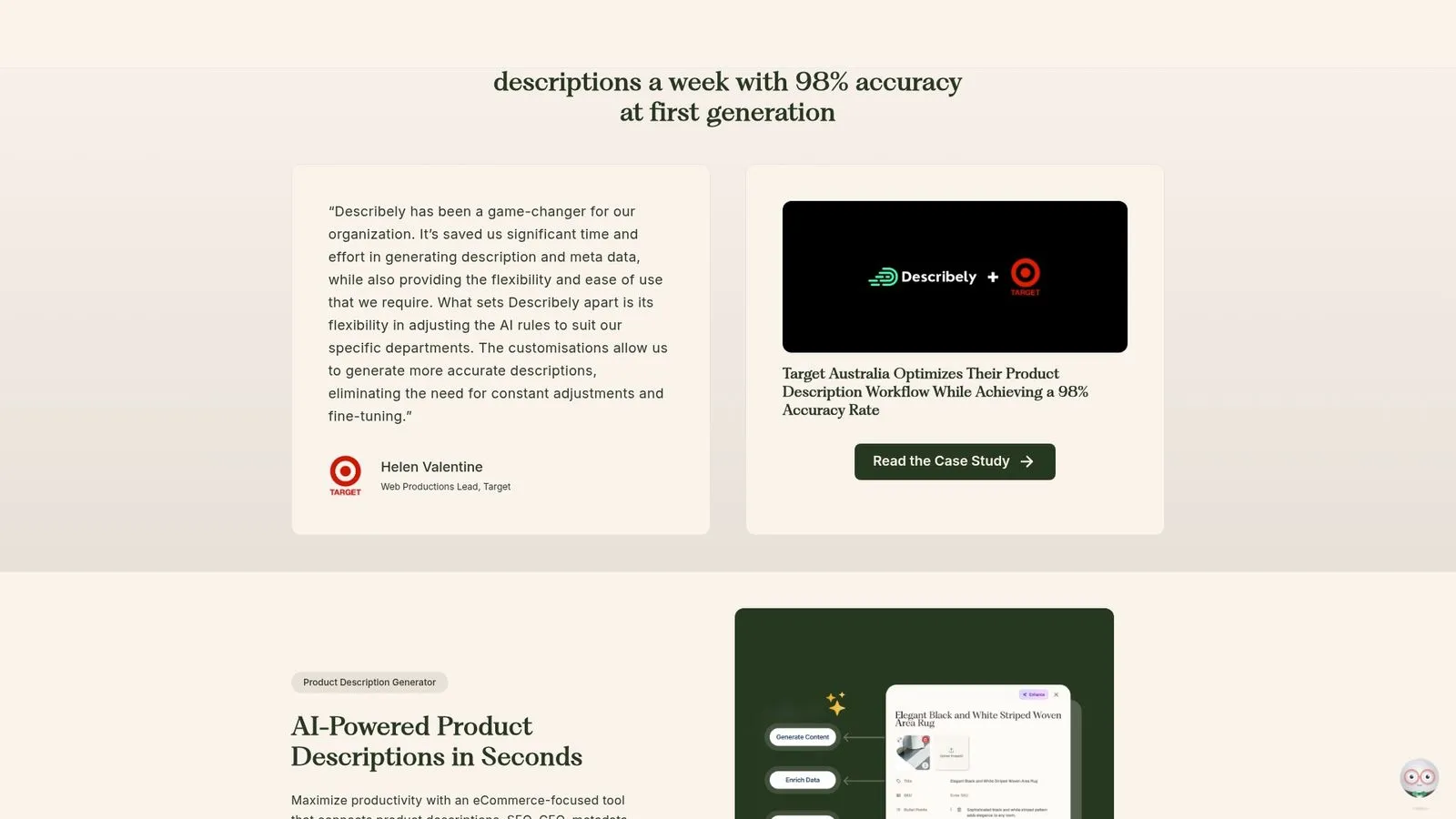
Describely’s marketing materials state a 98% accuracy rate in a Target Australia case study. That figure highlights the platform’s focus on precision when auto-generating product text. The product targets large catalogues and bulk operations rather than single-item manual editing.
Core Features
Describely generates SEO-ready product descriptions and can produce content in bulk for thousands of SKUs, using AI content rules to match tone and brand voice. It enriches missing product fields automatically and offers AI Images to create or enhance visuals alongside textual content. The platform synchronises with major storefronts and PIM systems to keep catalogue data consistent.
Key Differentiator
The platform combines high-volume generation with configurable content rules so you can apply consistent brand voice across thousands of listings. Integrations with platforms such as Shopify and Akeneo reduce the need for manual imports. That pairing of scale and customisation is the primary angle that separates it from simpler description tools.
Pros
Describely scales to handle very large catalogues and keeps brand tone consistent with customisable rules, which matters when you run multiple storefronts. The bulk enrichment feature fills gaps in your product records, which reduces manual tagging and speeds up launches. Integrations with common eCommerce platforms remove several manual steps in a typical content workflow and lower the chance of import errors.
Cons
- Relies on existing product data quality. Poor initial data limits output quality and may require pre-cleaning.
- Initial setup and customisation can need technical knowledge for integrations and rule creation.
- Pricing can become significant at very high volumes since enterprise plans use custom pricing and per-product fees.
When It May Not Fit
If you manage a small catalogue with a handful of SKUs, the platform’s bulk focus may be excessive. Teams with minimal technical resource may find integration and training burdensome. If your product records are incomplete and you cannot allocate time to clean them first, output will require more manual review.
Notable Integrations
- Shopify for direct export and catalogue syncing.
- WooCommerce, Wix, and Squarespace for common storefront imports.
- Akeneo for PIM synchronisation and centralised data management.
- CSV file import for one-off or bespoke data transfers.
Who It’s For
Ecommerce retailers, brands, and marketing agencies that manage large catalogues and need fast, consistent product content will gain most. Teams that publish across multiple platforms or use a PIM will see the integration benefits. Smaller sellers with few SKUs may find the platform more than they need.
Real World Use Case
Target Australia used Describely to automate product description workflows and reported a 98% accuracy rate in its case study. That example shows how retailers with broad assortments can cut manual effort while keeping descriptions aligned to a brand voice and SEO targets.
Pricing
Describely uses pay-as-you-go pricing at $0.75 per product, with extra charges for enrichment and images. A free trial covers the first five products. Custom enterprise plans are available for very large catalogues and tailored needs.
Website: https://describely.ai
Comparison of alternatives
When evaluating platforms for Shopify product page generation, it’s essential to identify the most pressing priorities specific to your operation. The products examined here cater to diverse needs, excelling in efficiency, compatibility, and scalability for varying Shopify merchant requirements.
Feature strengths across evaluated tools
EcomEye excels in generating SEO-ready Shopify product pages with integrated DMCA-compliant AI images, targeting merchants who prioritise metadata consistency and optimised workflows. Meanwhile, UPPIFY stands apart by supporting multiple e-commerce platforms like WooCommerce and Magento, appealing to businesses that operate across diverse sales channels and require compatibility beyond Shopify. Lastly, PagePilot.ai offers tiered pricing with a free trial and competitive features catered towards new or budget-conscious businesses starting their e-commerce journey.
Scaling and customisation capacities
For operations needing fine-tuned content generation, TextBrew provides API access and brand tone adaptability, serving retail agencies managing heavily customised client requirements. Additionally, Describely supports high-volume catalogues by creating extensive SKUs and aligning product information with set branding presets, streamlining operations for larger merchant networks. Suitable for Shopify stores, D2C Bot generates content with remarkable speed, enabling timely updates for rapidly changing inventories.
Best fit
- High-volume Shopify merchants needing bulk listing automation will find EcomEye efficient with its streamlined interface and DMCA-compliant feature set focused exclusively on Shopify.
- Agencies prioritising tone-of-voice adaptability with API access should explore TextBrew, which offers customisable workflow automation.
- Sellers using non-Shopify e-commerce platforms, such as WooCommerce users, will appreciate UPPIFY’s flexible integration compatibility with various storefront systems.
- Low-budget marketers requiring a versatile free tier might consider PagePilot.ai, which includes a no-credit card trial for initial exploration.
- Micro-enterprises seeking straightforward operations yet periodic large-volume updates may find D2C Bot’s speed an advantage at its accessible pricing model.
Our pick
After carefully comparing the alternatives, we recommend EcomEye for Shopify merchants managing large-scale catalogues. EcomEye’s extensive automation, compliance-focus, and efficient interface reduce manual workload and ensure streamlined and optimised product page generation tailored to large operational needs. For non-Shopify users, however, a different tool may better serve broader platform compatibility needs.
Here is a comparison table helping you evaluate various product page generation tools tailored for Shopify merchants based on their notable features and pricing. This breakdown highlights key aspects relevant to decision-making when selecting the right platform.
| Tool | Core feature | Key differentiator | Starting price | Notable limitation |
|---|---|---|---|---|
| Ecom-eye | Converts bulk supplier links to SEO Shopify pages | Direct Shopify export with DMCA-safe outputs | €225/month | Restricted to Shopify platform |
| PagePilot.ai | Creates pages and ads from single product URLs | Multi-language support and page builder | $39/month | Inconsistent theme compatibility |
| D2C Bot | Generates titles, FAQs, and images at speed | High-speed content generation | $9/month | Occasional mismatched tone details |
| TextBrew | Aggregates data for EAN-based product content | Multi-source data and custom tone profiles | Price not published | Requires high-quality source data |
| UPPIFY | Automates multi-platform product listings | Supports multiple storefront syncs | €29/month | Chrome extension not yet available |
| Describely | Bulk AI descriptions and SEO metadata generation | Pay-as-you-go with customisable rules | $0.75 per product | Initial data cleaning might be required |
Managing Bulk Product Listings With Efficient AI Tools
High-volume Shopify dropshippers often struggle with duplicated content, low SEO rankings, and time-consuming manual listing creation. Ecom-eye eliminates these challenges by generating copyright-safe, SEO optimised product pages in bulk from AliExpress and competitor links. It produces clean descriptions, optimised titles, and high-quality AI images, then exports directly to Shopify in one click.
Key advantages include:
- Consistent metafields and multi-language pages
- Elimination of rewrite and copyright risks
- Streamlined bulk imports and fast publishing
See how Ecom-eye handles bulk product listings and reduce hours of manual work. Visit Ecom-eye to import your products from competitor links and publish optimised listings with minimal effort.
FAQ
How does Ecom-eye handle SEO for product pages?
Ecom-eye generates SEO-ready product pages, including optimised titles and descriptions from imported supplier links. Its workflow produces clean templates and maintains consistent metafields for each listing. This allows Shopify store owners to publish listings quickly while ensuring that they are well-optimised for search engines.
What is the difference between Ecom-eye and PagePilot.ai?
PagePilot.ai excels at providing a fast setup, allowing merchants to launch a full Shopify store in just two minutes, supported by a drag-and-drop page builder. Ecom-eye, on the other hand, focuses on bulk creation of product listings, making it ideal for those who need to publish large catalogues efficiently.
Can I use Ecom-eye for bulk product page creation?
Ecom-eye is specifically designed for bulk product page creation, enabling users to generate over 30 product pages per day from supplier links. This caters to Shopify store owners and dropshippers aiming for rapid catalogue expansion without sacrificing quality.
Does Ecom-eye support multi-language listings?
Yes, Ecom-eye supports multi-language listings, which allows store owners to cater to international customers and expand their market reach. This capability enhances Ecom-eye’s appeal for merchants selling to various regions.
How does Ecom-eye ensure copyright compliance for images?
Ecom-eye pairs generated product copy with DMCA-safe AI images, thereby reducing the risk of copyright infringement from reused assets. This is particularly beneficial for Shopify store owners concerned about compliance issues when listing products.
Ready to boost your product pages?
Generate high-converting, SEO-optimized product pages in bulk using AI automation used by e-commerce experts.
No credit card required