Product description ideas to boost Shopify SEO in 2026
Discover proven product description ideas that improve Shopify SEO rankings and conversions. Learn keyword strategies, avoid duplicate content risks, and implement structured data for better search visibility in 2026.

Most Shopify dropshipping stores struggle with product descriptions that fail to rank in Google or convince visitors to buy. Copying manufacturer text or competitor pages leads to duplicate content penalties, poor SEO performance, and potential copyright issues. Effective product descriptions balance keyword optimisation with persuasive, benefit-driven copy that addresses buyer needs. This article explores proven criteria and creative ideas to write winning product descriptions that drive organic traffic and conversions for your Shopify store in 2026.
Table of Contents
- Criteria For Effective Shopify Product Descriptions
- Use Keyword Research And Long-Tail Keywords Creatively
- Craft Unique, Benefit-Centred Descriptions To Reduce Copyright Risk
- Leverage Structured Data Markup To Boost Search Appearance And CTR
- How EcomEye Can Help Automate Your Product Descriptions
- Frequently Asked Questions
Key takeaways
| Point | Details |
|---|---|
| Dual purpose descriptions | Effective product descriptions must rank in Google search and persuade visitors to purchase. |
| Mobile-first formatting | Over 70% of shoppers browse on mobile, requiring scannable bullet points and short paragraphs. |
| Unique benefit-driven copy | Original descriptions highlighting emotional and practical benefits convert 78% better than feature lists. |
| Structured data markup | Schema implementation can increase click-through rates by up to 30% through rich search results. |
| Long-tail keyword strategy | Targeting specific search phrases drives 10-20% more qualified organic traffic to product pages. |
Criteria for effective Shopify product descriptions
Every successful product description serves dual goals: ranking in Google search and convincing visitors to buy. These two objectives require different approaches but must work together seamlessly. Your primary keyword should appear within the first sentence, ideally in the opening 20 words, to signal relevance to both search engines and human readers. However, keyword placement alone won’t drive conversions.
Over 70% of e-commerce traffic comes from mobile devices, making scannability essential. Descriptions must work perfectly on a 4-inch screen where users scroll quickly and make snap judgements. Use short paragraphs of two to three sentences maximum. Break up text with bullet points that highlight key features and benefits. White space improves readability and reduces cognitive load for mobile shoppers.
Focus on benefits rather than features alone. Features describe what a product is or does, whilst benefits explain how it improves the customer’s life. Instead of “stainless steel construction,” write “rust-resistant stainless steel that stays beautiful for years.” Sensory language helps buyers imagine owning and using the product. Product content directly affects 87% of purchase decisions, so understanding your ideal customer’s pain points and desires is crucial.
Avoid thin content that provides minimal information or fails to address common buyer questions. Comprehensive descriptions between 300 and 500 words typically perform best, offering enough detail to build confidence without overwhelming readers. Consider implementing Shopify store features that enhance both SEO and conversion rates across your entire catalogue.
Pro tip: Front-load your most important keywords and value proposition within the first 160 characters, as this text often appears in search result snippets and social media previews.
Use keyword research and long-tail keywords creatively
Keyword research reveals exactly what terms your potential customers type into Google when searching for products like yours. This intelligence guides your entire content strategy and helps you speak the same language as your audience. Generic single-word keywords like “shoes” face massive competition, whilst specific phrases like “waterproof hiking boots for women” attract buyers further along the purchase journey.

Long-tail keywords drive 10-20% increases in organic traffic because they target niche buyer intent with less competition. These multi-word phrases convert better because searchers know exactly what they want. Someone searching “running shoes” might be researching options, but “cushioned running shoes for flat feet” indicates purchase readiness. Integrate these phrases naturally within your title tags, meta descriptions, and product copy.
Avoid keyword stuffing, which damages readability and triggers Google penalties. Search engines have become sophisticated at recognising natural language patterns versus artificial keyword insertion. Write for humans first, ensuring every sentence provides value and flows conversationally. Keywords should enhance meaning rather than disrupt it.
Optimising product descriptions requires incorporating relevant search terms your audience actually uses, discovered through tools like Google Keyword Planner or SEMrush. Include seasonal keywords for timely campaigns that capitalise on shopping trends. “Christmas gift for mum” or “back to school backpack” drive significant short-term traffic spikes when timed correctly.
Use synonyms and related phrases to broaden your search visibility without repetition. If your primary keyword is “yoga mat,” naturally incorporate “exercise mat,” “fitness mat,” and “workout surface” throughout the description. This semantic richness helps Google understand your content’s full context whilst avoiding monotonous repetition. Consider keyword research strategies that support both local and global market targeting.
Craft unique, benefit-centred descriptions to reduce copyright risk
Copying manufacturer descriptions or competitor content creates serious problems for Shopify dropshippers. Google penalises duplicate content, pushing identical pages down in search rankings or excluding them entirely. When hundreds of stores sell the same product with identical descriptions, none rank well. Beyond SEO issues, copying text may constitute copyright infringement, exposing you to legal liability.
Creative writing elements like unique style, word choice, and marketing approach receive copyright protection. Whilst basic factual statements about product specifications aren’t copyrightable, the specific expression and presentation of those facts can be. Writing original descriptions in your own voice protects your business legally whilst building brand identity that competitors can’t replicate.
Benefit-focused copy dramatically outperforms generic feature lists. Products with benefit-centred descriptions convert at 78% higher rates because they connect emotionally with buyers. Tell a story about how the product solves problems or enhances the customer’s lifestyle. Instead of listing technical specifications, paint a picture of the transformation or experience the buyer gains.
Highlight both emotional and practical benefits to appeal to different decision-making styles. Some buyers respond to logical arguments about durability and value, whilst others prioritise how a product makes them feel. “Stay organised and reduce morning stress with dedicated compartments for everything” combines practical utility with emotional reassurance.
Pro tip: Develop a distinctive brand voice that reflects your target audience’s values and communication style, then apply it consistently across all product descriptions to build recognition and trust.
Regularly update descriptions to keep content fresh and relevant. Search engines favour recently modified pages, and buyers appreciate current information. Review your top-selling products quarterly to refine messaging based on customer feedback and seasonal trends. Learn more about avoiding duplicate product descriptions whilst maintaining efficiency at scale.
Leverage structured data markup to boost search appearance and CTR
Structured data helps Google understand your product information with precision, enabling enhanced search result features that increase visibility and clicks. Schema markup provides explicit signals about product attributes like price, availability, ratings, and specifications. This technical SEO element complements great copywriting by ensuring search engines can parse and display your content optimally.
Implementing structured data markup can increase click-through rates by up to 30% through rich snippets that stand out in search results. When your listing displays star ratings, price information, and stock status directly in Google, it captures attention and builds trust before users even visit your site. These enhanced listings occupy more screen space and appear more authoritative than plain text results.
Key schema properties for product pages include Offers (price and availability), Brand, SKU, Description, Image, and Name. Each property communicates specific information to search engines in a standardised format they can reliably interpret. Google’s Rich Results rely heavily on structured data with specific required properties, so incomplete implementation may prevent your listings from qualifying for enhanced features.
Adding review schema surfaces star ratings and aggregate scores directly in search results, dramatically improving perceived credibility. Products displaying ratings attract more clicks because social proof reduces purchase risk. Encourage customers to leave reviews and implement schema to showcase this valuable content where it matters most.
| Schema type | Required properties | SEO benefit |
|---|---|---|
| Product | Name, Image, Description | Basic rich snippet eligibility |
| Offers | Price, Availability, Currency | Price display in search results |
| AggregateRating | RatingValue, ReviewCount | Star ratings in search listings |
| Brand | Name | Brand recognition and filtering |
SEO-friendly product pages combine rich structured data with compelling textual descriptions. The markup ensures technical compatibility with search features, whilst your copywriting persuades humans to click and buy. Neither element succeeds alone. Explore structured data implementation for Shopify product pages to automate this technical requirement across your entire catalogue.
How EcomEye can help automate your product descriptions
Creating unique, optimised product descriptions for hundreds or thousands of items becomes overwhelming quickly. Manual writing takes hours per product, and hiring copywriters costs add up fast. EcomEye solves this challenge by automating the generation of copyright-safe, SEO-friendly product descriptions at scale whilst maintaining the quality and uniqueness that Google rewards.
Import products in bulk from AliExpress or competitor links, then let AI generate optimised titles, clean descriptions, and SEO-ready content automatically. Each description uses unique phrasing and structure to avoid duplicate content penalties. The system incorporates keyword optimisation and benefit-driven language that converts visitors into buyers without requiring manual rewriting.
EcomEye supports structured data implementation automatically, ensuring your product pages qualify for rich search results from day one. Multi-language page generation expands your market reach whilst maintaining SEO best practices across different regions. Export directly to Shopify in one click, eliminating tedious manual data entry.
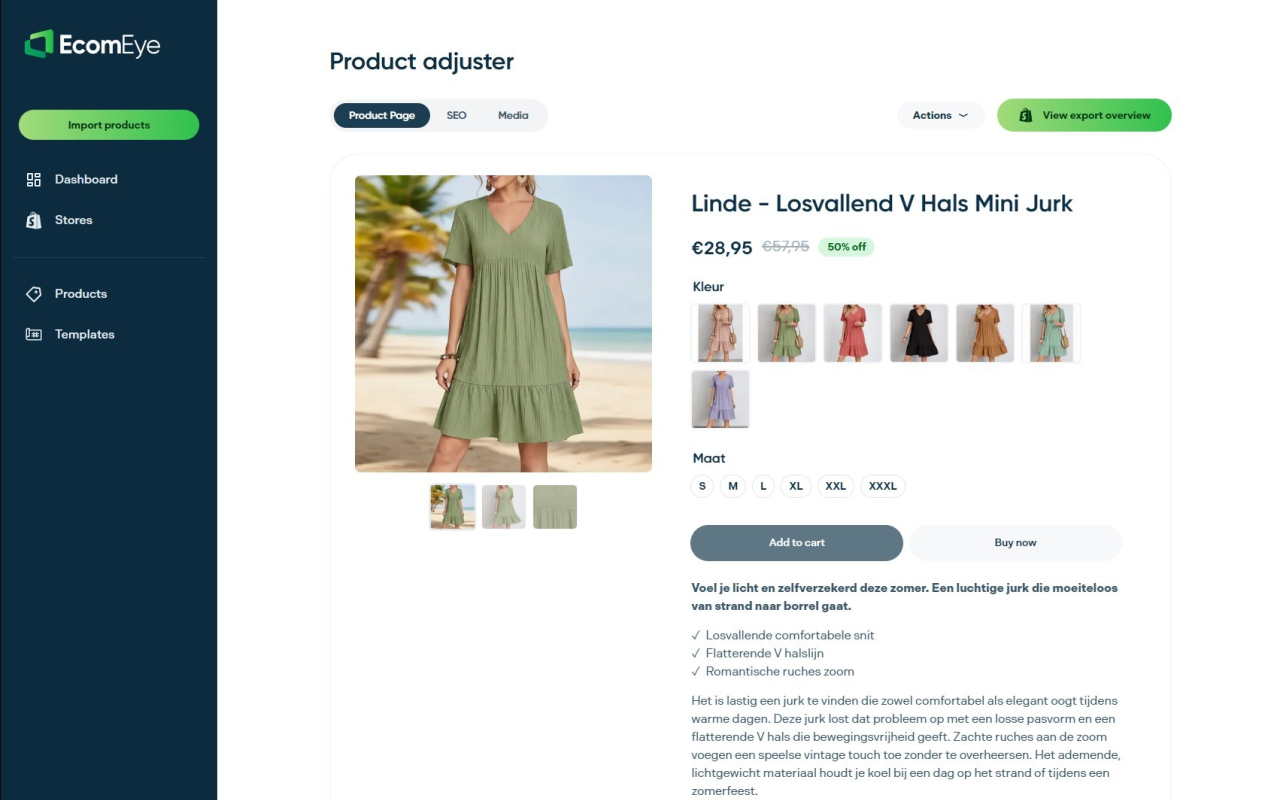
Flexible pricing plans accommodate different store sizes and growth stages, making professional product descriptions accessible whether you’re launching your first ten products or managing a catalogue of thousands. The platform handles the technical complexity of SEO whilst you focus on sourcing winning products and growing your business.
Pro tip: Automation eliminates the temptation to copy-paste competitor descriptions when you’re rushed, protecting your store from copyright risks and duplicate content penalties whilst maintaining consistent quality across your entire catalogue.
Frequently asked questions
How do I balance SEO optimisation with persuasive copywriting?
Start with keyword research to identify terms your audience searches, then integrate these phrases naturally within benefit-focused copy that addresses customer needs. Place your primary keyword in the opening sentence and title, but prioritise readability and persuasion throughout. Use bullet points to highlight key benefits whilst maintaining conversational flow that builds trust and desire.
Why should I avoid using manufacturer product descriptions?
Manufacturer descriptions appear on hundreds of websites, creating duplicate content that Google penalises with lower rankings or complete exclusion from search results. Copying text also risks copyright infringement claims. Original descriptions protect your business legally whilst giving you a competitive SEO advantage that drives more organic traffic and sales.
What role does structured data markup play in product SEO?
Structured data enables rich search results featuring star ratings, prices, and availability directly in Google listings. These enhanced results capture attention, build credibility, and can increase click-through rates by up to 30%. Proper schema implementation helps search engines understand your product information precisely, improving both visibility and relevance matching.
How often should I update my product descriptions?
Review and refresh descriptions for your top-selling products quarterly, incorporating customer feedback, seasonal trends, and updated keyword research. Search engines favour recently modified content, and buyers appreciate current information. Even minor updates signal freshness whilst giving you opportunities to test new messaging approaches and improve conversion rates.
Can seasonal keywords significantly boost sales?
Seasonal keywords like “Christmas gift” or “summer essentials” drive substantial short-term traffic spikes when timed correctly. Shoppers actively searching for seasonal products have high purchase intent. Update relevant product descriptions 4-6 weeks before peak seasons to capture early planners, then maintain optimisation throughout the shopping period for maximum impact.
Ready to boost your product pages?
Generate high-converting, SEO-optimized product pages in bulk using AI automation used by e-commerce experts.
No credit card required