Top 3 Shopify Automation Tools Alternatives 2026
Discover the top 3 Shopify automation tools alternatives for 2026. Make an informed decision and enhance your store's efficiency.

Top 3 Shopify Automation Tools Alternatives 2026

Bulk uploading and updating Shopify product listings wastes time and creates inconsistent catalogue quality for merchants and e-commerce teams. Many solutions restrict direct export to Shopify, limit language support, or lock essential bulk features behind high monthly fees. This comparison covers price, export limits, AI quality, and language support so merchants and e-commerce teams can match each tool to their catalogue needs for 2026.
Table of Contents
EcomEye
At a Glance
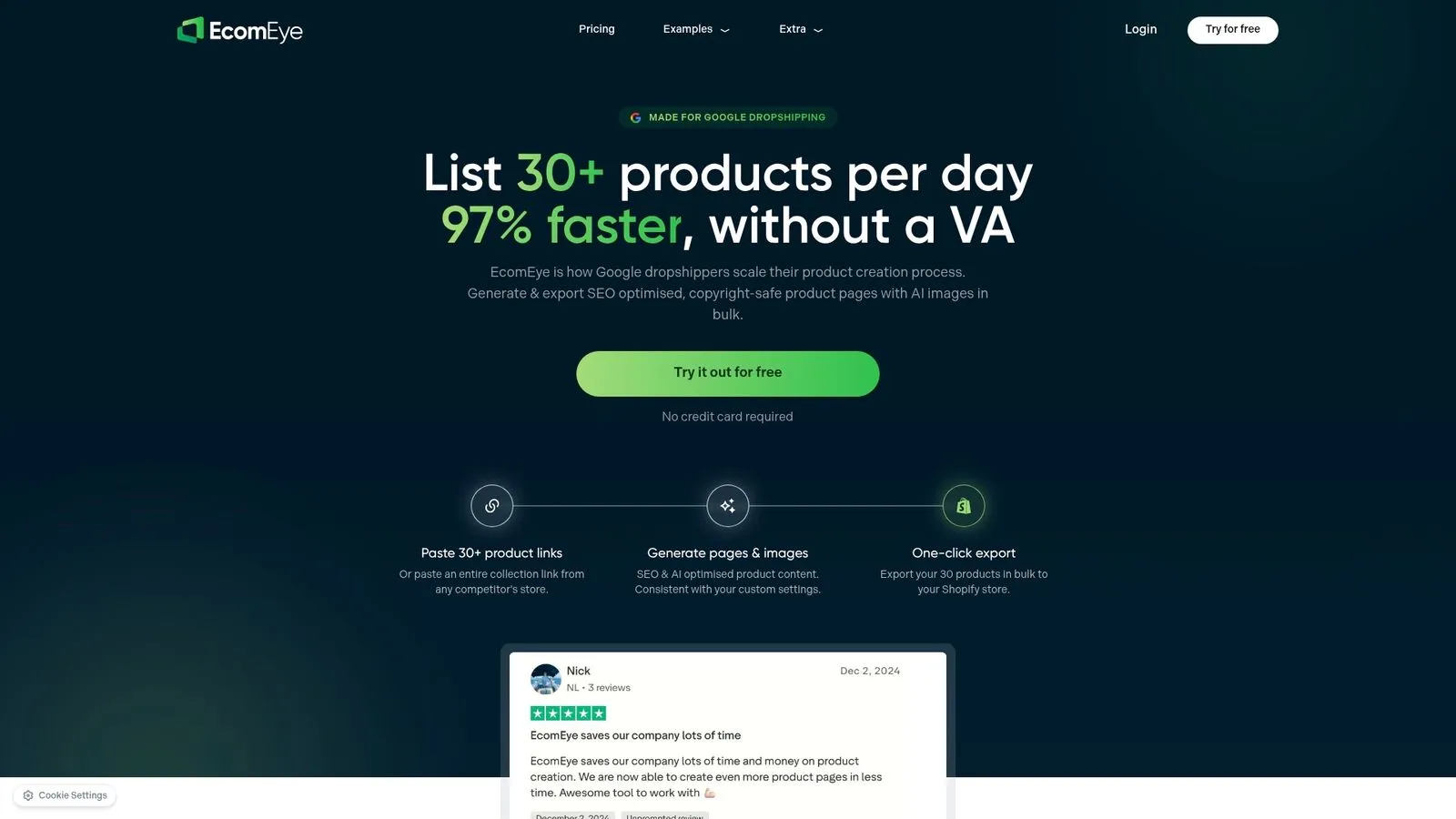
First 3 product pages and 20 images are free, and no credit card is required to start. The platform targets Google dropshippers who need bulk listing output and copyright-safe copy. It exports product pages directly to Shopify in a single click, cutting manual listing steps.
Core Features
EcomEye imports product links in bulk from suppliers and competitor pages, then generates SEO-optimised titles and clean descriptions with AI. It also produces studio-quality product images and applies customizable templates for consistent listings and visuals. Finally, it offers one-click bulk export to Shopify to move generated pages into your store quickly.
Key Differentiator
The standout is bulk generation of SEO-optimised, copyright-safe product pages and images using AI to replace virtual assistant listing work. That single focus aligns content and images for Google Shopping and Ads readiness. It reduces repetitive editing by producing consistent, template-based outputs across large catalogues.
Pros
EcomEye speeds catalogue build by handling imports, content generation, and image creation in batches, which reduces the time you spend on manual listings. Template-based output keeps descriptions and image styles uniform, helping you maintain brand tone and avoid accidental duplicate content. The system supports supplier sources such as AliExpress and competitor pages, and it claims copyright-safe unique content to lower DMCA risk.
Cons
- Currently limited to exporting to Shopify only, so multi-channel merchants must use additional tooling to list elsewhere.
Who It’s For
This tool suits Google dropshippers and e-commerce store owners running large product catalogues who need SEO-optimised, copyright-safe listings at scale. It will appeal to teams replacing VA workflows or agencies managing many SKUs. It is less appropriate for shops with only a handful of one-off listings.
Unique Value Proposition
At €225 monthly for 900 product pages and €513 monthly for 2,700 images, EcomEye turns catalogue volume into a predictable line item. The vendor lists €0.25 per product page and €0.19 per image as the unit economics for those tiers. That pricing model makes it straightforward to calculate listing costs when planning a scaling push.
Real World Use Case
A dropshipping entrepreneur imports hundreds of supplier links, batches content and image generation, then exports to Shopify, reducing days of manual work to hours. Generated pages arrive with SEO-ready titles and clean descriptions formatted to the chosen template. The process shortens time-to-market and lowers reliance on outsourced listing labour.
Pricing
The platform charges €225 monthly for 900 product pages and €513 monthly for 2,700 images, with per-unit figures reported above. The first 3 pages and 20 images are free to test without a card. Volume discounts are available for larger batches.
Website: https://ecom-eye.com
D2C Bot
At a Glance
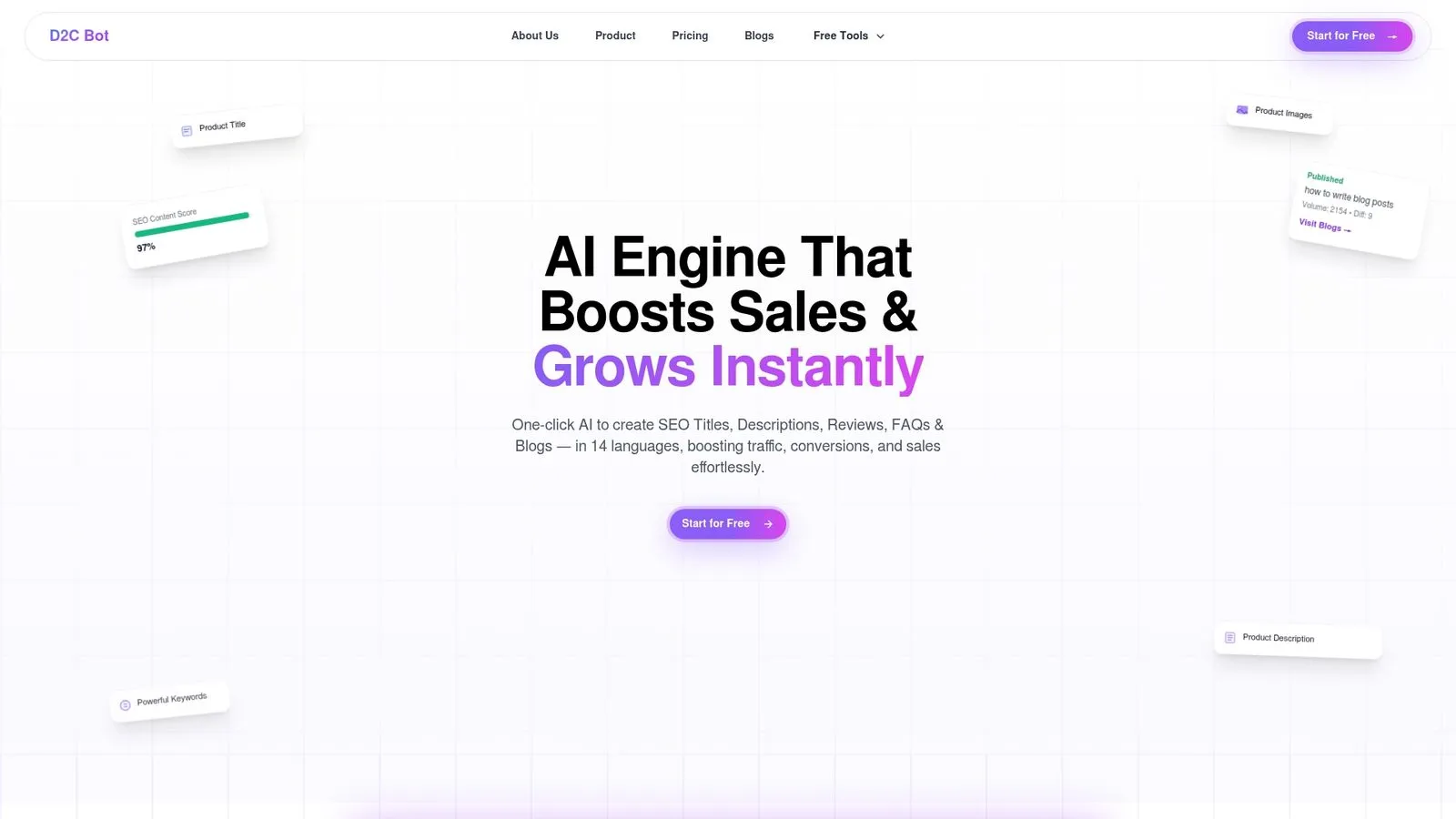
D2C Bot claims AI powered content generation in 2.5 seconds for single items. The vendor also advertises support for 14+ languages and native Shopify connection. It produces titles, descriptions, images, reviews, FAQs and blogs for large catalogues. That speed claim suggests quick iteration when you update many listings.
Core Features
D2C Bot generates product titles, descriptions, reviews, FAQs, images and blog posts with SEO optimisation embedded in every output. It offers bulk processing for large catalogues, configurable brand voice and multi language content for international expansion. The platform connects directly to Shopify and provides AI driven recommendations to shape content strategy.
Key Differentiator
The one distinctive angle is the combination of native Shopify integration with fast, multilingual content creation. The vendor states support for 14+ languages, which lets merchants publish localised listings without separate translation tools. That pairing targets stores that need catalogue changes pushed to Shopify quickly and in multiple markets.
Pros
D2C Bot offers rapid content production, which lowers the time your team spends writing listings and blogs. Deep Shopify integration simplifies catalogue updates and keeps content in sync with product data. Multi language capability and built in SEO optimisation reduce the need for separate translation and SEO tools, making the platform a cost effective alternative to stitching together several apps.
Cons
-
Third party reviews report limits with AI content accuracy and consistency, so outputs may require manual editing.
-
Some users say the AI produces generic or less relevant copy for specialised niche products.
-
Pricing details beyond the Starter plan are not fully listed, which complicates budgeting for large scale or enterprise usage.
When It May Not Fit
If your catalogue contains highly technical or regulated product copy that demands strict accuracy, D2C Bot may produce content needing close human review. Larger merchants requiring clear enterprise plans, service level agreements or volume discounts might find available pricing information insufficient. Teams expecting perfect first draft copy will face extra editing work.
Who It’s For
Shopify merchants and e commerce entrepreneurs who need fast, repeatable content for hundreds or thousands of SKUs. It suits stores expanding into international markets that want localised listings without hiring translators. Smaller teams that prefer fewer tools to manage product pages will find the combined features practical.
Real World Use Case
A mid size fashion retailer used D2C Bot to generate SEO optimised product titles, full descriptions and customer review stubs in multiple languages. The store pushed updates directly to Shopify and reduced manual copywriting time, allowing staff to focus on photography and merchandising.
Pricing
D2C Bot lists a Starter plan at $9/month with 150 credits. The vendor describes additional plans and a subscription model with tiered credits for scaling, but full tier details and enterprise pricing are not publicly listed.
Website: https://d2cbot.com
Semantico

At a Glance
Semantico reports its AI produces instant, 80% complete first drafts of product listings that you can review and export in minutes. The platform claims rapid bulk output and language translations for catalogue rollout. That emphasis on speed is its clearest selling point.
Core Features
Semantico performs AI driven automatic generation of product titles, descriptions, and attributes in seconds while suggesting category tags and prices. It applies SEO and GEO optimisation and offers one click translation into multiple languages. Direct publishing and export to major commerce platforms let you push updated listings to stores without manual reformatting.
Key Differentiator
The stated edge is a high fidelity first draft that covers most listing fields quickly. That figure shortens review cycles so teams spend less time on repetitive copy work. This suits retailers who prioritise catalogue velocity more than bespoke, hand crafted product narratives.
Pros
Rapid, automated listing creation cuts manual workload and reduces repetitive errors, making bulk uploads feasible for larger catalogues. The system scales from small catalogues to enterprise volumes and supports multiple languages for international expansion. Integrations with Shopify, Magento, BigCommerce, and WooCommerce keep the publishing workflow inside familiar store platforms, which reduces export friction and admin time.
Cons
- Third party reviews flag the need to check whether AI generated copy matches a specific brand voice and accuracy level.
- Subscription pricing is on the higher side for very small catalogues and low volume sellers.
- Some teams will face a learning curve when adopting AI driven tooling and review processes.
When It May Not Fit
If your brand requires handcrafted, highly specific product copy for a small catalogue this tool may produce work that still needs substantial editing. If budget is limited for catalogue maintenance and you run only a handful of SKUs the subscription model may prove expensive. Teams without staff able to review AI output will struggle to maintain accuracy.
Notable Integrations
- Shopify
- WooCommerce
- Magento
- BigCommerce
Who It’s For
Retailers and brands managing hundreds to thousands of SKUs who need to accelerate listing creation and expand into other markets. Merchants who already use the listed ecommerce platforms will find the export routes convenient. Buyers seeking purely bespoke copy for a small range will not get full value.
Real World Use Case
The vendor states a retail company launched more than 8,000 products, descriptions, images, and translations within seven days using Semantico. That example shows the product can compress time to market for large catalogues when a rapid rollout matters.
Pricing
Semantico uses subscription pricing that starts around €350 and scales to €850 or more per month depending on the plan, with enterprise options available. Small sellers should plan for ongoing monthly cost when modelling ROI.
Website: https://semantico.ai
Comparison of alternatives
For users seeking efficient bulk listing creation optimised for Shopify, EcomEye demonstrates a pronounced advantage through its focused approach. The comparison below examines dimensions including bulk generation efficacy, multilingual content capability, and platform compatibility to identify the best tool for varying needs.
Bulk creation efficiency
EcomEye excels in providing AI-powered SEO-optimised product pages and imagery tailored specifically for Shopify stores. This design transforms catalogue building by minimising manual labour and ensuring consistency. While Semantico achieves high-speed draft creation, with a focus on multi-platform exports rather than Shopify optimisation, it does not match EcomEye’s nuanced expertise tailored to Google dropshipping demands.
Multilingual support for global reach
D2C Bot leads in multilingual content generation, supporting over 14 languages directly integrated with Shopify. This advantage streamlines content creation for merchants penetrating international markets. Comparatively, while Semantico also offers language translation for broader markets, its focus diverges towards cross-platform efficiency rather than Shopify-centric enhancements.
Best fit
- Shopify stores focusing on bulk catalogue creation will find EcomEye ideal due to its precise SEO-oriented listing production and Shopify integration.
- Stores needing support for internationalisation via multilingual content can benefit significantly from D2C Bot’s language capabilities, eliminating separate translation software.
- Retail teams seeking compatibility with diverse platforms, including Magento and WooCommerce, will appreciate Semantico’s scalable integrations and bulk output features.
Our pick
When the focus is on optimised Shopify effectiveness at scale, EcomEye presents a purpose-built solution. Its functionalities stand out for stores prioritising speed, consistency, and search engine preparedness in their bulk product uploads. However, businesses requiring expansive multilingual support or working across various platforms may consider D2C Bot or Semantico, respectively, as competitive alternatives.
Choosing the right Shopify automation tool depends on features like SEO optimisation, language support, integration capabilities, and subscription cost efficiency.
| Product | Feature Highlights | Best For | Pricing | Limitation |
|---|---|---|---|---|
| Ecom-eye | SEO-optimised product pages and AI-generated images | Google dropshippers with scale | €225/month (900 pages), €513/month (2,700 images) | Limited to Shopify for exports |
| D2C Bot | Multilingual content in 14+ languages with deep Shopify sync | Quick iterative multilingual updates | $9/month (Starter plan) | Potentially requires manual adjustments for accuracy |
| Semantico | High-fidelity listings with multi-platform export options | Large, international catalogues | €350–€850+/month | Higher cost for low-volume operations |
What Challenges Do Shopify Automation Tools Still Leave Unsolved in 2026?
Many Shopify merchants and dropshippers face duplicate content issues that drag down SEO rankings and cause Google Merchant disapprovals. This problem costs time and sales when teams copy competitor listings or rewrite product pages manually. Ecom-eye solves these critical hurdles by generating copyright-safe, SEO optimised product pages and high-quality AI images in bulk. It imports product lists from AliExpress or competitors and exports directly to Shopify with one click, eliminating repetitive listing work.
Boost your catalogue speed and Google Shopping approval chances using Ecom-eye.
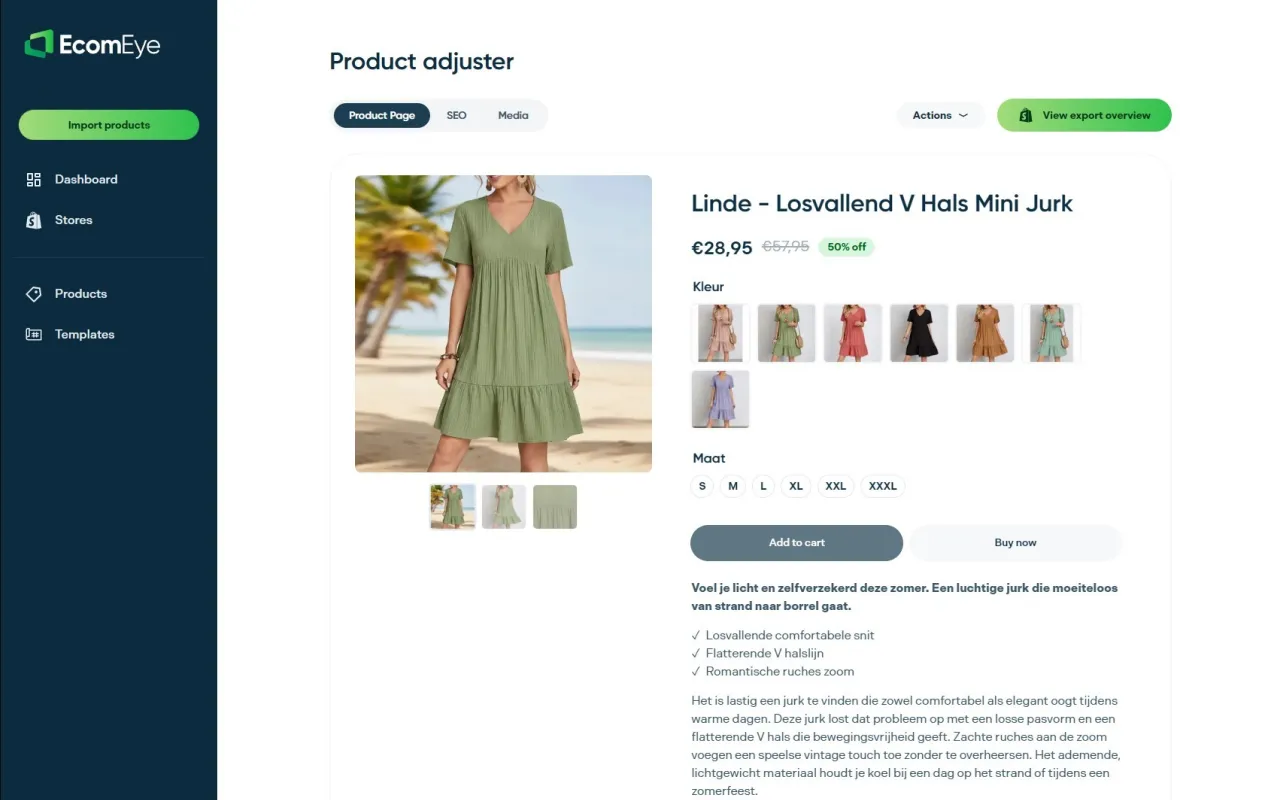
Test the free starter pages and see how automated SEO-ready content cuts hours of manual labour. Import your product links in bulk and export complete pages to Shopify with no rewriting or copyright worries.
FAQ
How does Ecom-eye assist with product listing automation?
Ecom-eye generates SEO-optimised product pages using AI. It imports product links in bulk from suppliers and competitor pages, creating titles and descriptions effortlessly. This speeds up catalogue building significantly, allowing you to focus on other aspects of your business.
What is the difference between D2C Bot and Ecom-eye?
D2C Bot excels in rapid content generation, claiming AI-powered content creation in just 2.5 seconds for individual items. Ecom-eye, on the other hand, focuses on bulk generation, allowing for efficient creation of multiple listings at once, which is beneficial for larger catalogues.
Can I expect consistent image quality with Ecom-eye?
Ecom-eye produces studio-quality product images and applies customizable templates for visual uniformity. This consistency in visuals helps maintain brand tone across listings, ensuring a more professional appearance in your store.
Does Ecom-eye support multiple e-commerce platforms?
Currently, Ecom-eye exclusively exports to Shopify. Merchants using other platforms may need additional tools to list products elsewhere, so it’s better for Shopify users who need seamless integration.
How much does Ecom-eye cost for product pages and images?
Ecom-eye offers a pricing tier starting at €225 monthly for 900 product pages and €513 monthly for 2,700 images. This structure allows users to predict their listing costs easily as they scale up their catalogues.
Ready to boost your product pages?
Generate high-converting, SEO-optimized product pages in bulk using AI automation used by e-commerce experts.
No credit card required