Trademark in Product Titles: What Dropshippers Can Use
Can you put a brand name in a product title? See what US law and Google Merchant Center allow, what gets listings flagged, and how to write safe titles.

Trademark in Product Titles: What Dropshippers Can Use

You can mention another company’s brand name in a product title only when it is true and necessary, for example to say a case fits a specific phone, and only when nothing suggests you are that brand, sell for it or are endorsed by it. For a dropshipper the safest default is simpler: leave third-party brand names, logos and slogans out of titles unless you hold the right to use them. That protects you from US trademark claims, and it protects your Google Merchant Center account.
This guide explains where the line sits in the United States, what Google adds on top of the law, which title patterns get flagged, and a practical way to write titles that rank without borrowing someone else’s name.
TL;DR
- A trademark in a title is a problem when it is likely to confuse buyers about who made or sold the product, or implies affiliation or endorsement.
- Truthful compatibility or identification (“fits [brand] device”) is the usual exception, but it is a legal defence you argue after a complaint, not a licence.
- Google does not restrict retailers’ trademark use in free listings, but it reviews owner complaints, and misrepresentation or counterfeit signals can suspend an account.
- Most AliExpress-sourced titles carry brand names, “dupe of” phrasing or celebrity references. Strip them before you publish.
- Write titles around product type, material, size, use and audience. They rank on generic searches and carry no legal baggage.
Table of Contents
- What a trademark is, and why titles are where trouble starts
- When using a brand name can be legitimate
- What Google adds on top of the law
- Title patterns that get dropshippers flagged
- How to write a title without a trademark
- Trademark, copyright and SEO are three different things
- Our perspective: titles are a data problem, not a legal one
- Using Ecom-eye to clean titles in bulk
- If you already have flagged listings
- FAQ
- Sources
What a trademark is, and why titles are where trouble starts
A trademark is a word, phrase, symbol or design that identifies who a product comes from. The US Patent and Trademark Office describes infringement as unauthorised use of a mark in connection with goods or services in a way likely to cause confusion, deception or mistake about their source (USPTO).
The key phrase is likely to cause confusion. A title is the first thing a shopper reads, in your store, in search results and in a Shopping listing. If it contains a famous name, the buyer reads it as a statement about the product: this is made by that brand, or approved by it. That is why titles attract more complaints than body copy does.
Two things make dropshipping especially exposed:
- Supplier titles are keyword-stuffed. Marketplace sellers routinely add well-known brand names to attract searches. Copy that title and the risk becomes yours.
- You never see the product. You cannot tell whether the item is genuine, a lookalike or a counterfeit, so you cannot truthfully claim it is the brand’s product.
If you want the wider picture beyond titles, our practical guide to product trademark risks for online sellers covers logos, images and store names too.
When using a brand name can be legitimate
Not every mention of a brand is infringement. US courts recognise that sometimes you cannot describe a product without naming the brand. The best known example is the Ninth Circuit’s New Kids on the Block decision of 1991, which created what is now called nominative fair use (Sidley Austin). In general terms, the defence looks at whether:
- the product cannot readily be identified without using the brand name;
- you use only as much of the mark as needed, with no logo or stylised lettering;
- nothing suggests sponsorship or endorsement by the brand owner.
The details vary by court, and the same article notes that the doctrine is not applied uniformly, so treat it as a defence rather than a safe harbour. Courts also compare products and context as a whole when judging confusion, not only whether two marks look identical (Ninth Circuit, 2020).
Other jurisdictions reach similar ideas by different routes. In the EU, informative use is allowed where it is necessary and fair, meaning it does not present goods as imitations, harm the brand’s reputation or suggest a commercial link (Novagraaf). If you sell outside the US, check each market separately.
Examples that sit on the safe side
| Title wording | Why it is lower risk |
|---|---|
| Silicone Case for iPhone 15, Shockproof, Matte Black | Names the device only to say what it fits, in plain text, with the maker clearly separate |
| Replacement Filter Compatible With [Brand] Model X Pitcher | States compatibility, makes clear it is a replacement part, no logo |
| Stainless Steel Coffee Capsule Refill, Reusable, Fits Nespresso-Type Machines | Describes function in generic terms |
Even here, “compatible with” must be true. If you cannot verify compatibility, do not claim it. Put the device name toward the end of the title, never first, so the product itself leads.
Examples that invite a claim
| Title wording | Problem |
|---|---|
| Nike Style Running Shoes, Air Max Look | Borrows a brand’s goodwill and invites confusion about origin |
| Dupe of [Luxury Brand] Tote Bag | “Dupe” signals imitation, a counterfeit flag for Google |
| Official Disney Princess Dress | Claims authorisation you do not have |
| Apple-Compatible Charger with Apple Logo | Uses the logo, which goes beyond identifying compatibility |
What Google adds on top of the law
Trademark law is only half the story for a Google dropshipper. Google Merchant Center has its own policies, and enforcement is faster than a court case.
Free listings. Google says it does not restrict retailers’ use of trademarks in titles or descriptions for trademarked or compatible products, but it does review claims from owners that the use is likely to confuse people about product origin. Owners can report use through a dedicated form (Google Merchant Center Help: Trademarks). So a brand name in a title is not automatically a violation, yet a single complaint can put your listing under review.
Misrepresentation. Google prohibits listings that misrepresent the product or falsely imply affiliation with or endorsement by another brand. Egregious cases can lead to account suspension without warning (Misrepresentation policy). Our guide to Google Merchant misrepresentation and how to fix it goes through the typical triggers.
Counterfeit goods. Google bans products that mimic a trademark or logo to pass as genuine. Violations lead to suspension without warning, and reinstatement happens only in compelling circumstances (Counterfeit products policy). This is the policy that matters most if your supplier sells lookalikes.
The practical reading: Google’s rule on titles is looser than many sellers fear, but its tolerance for anything that looks like imitation or false affiliation is close to zero. And because a suspension hits your whole account, not just one product, the downside is out of proportion to the upside of one extra keyword. If you are already in trouble, see our walkthrough of Google Merchant account suspension causes and a fix plan.
Title patterns that get dropshippers flagged
These are the patterns we see most in imported supplier data.
1. A famous brand as a style label
“Gucci Style”, “Louis Vuitton Inspired”, “Yeezy Type”. Adding “style” or “inspired” does not remove the confusion; it often shows you knew the brand was the draw.
2. Imitation vocabulary
“Dupe”, “replica”, “1:1”, “AAA quality”, “mirror quality”. These words describe a counterfeit. Remove them, and also check whether the product itself is a copy. If it is, rewriting the title will not fix it.
3. Official, authorised or licensed claims
Titles that say “official”, “authentic” or “licensed” make a factual claim. Unless you hold the paperwork, you are asserting something false.
4. Characters, teams and franchises
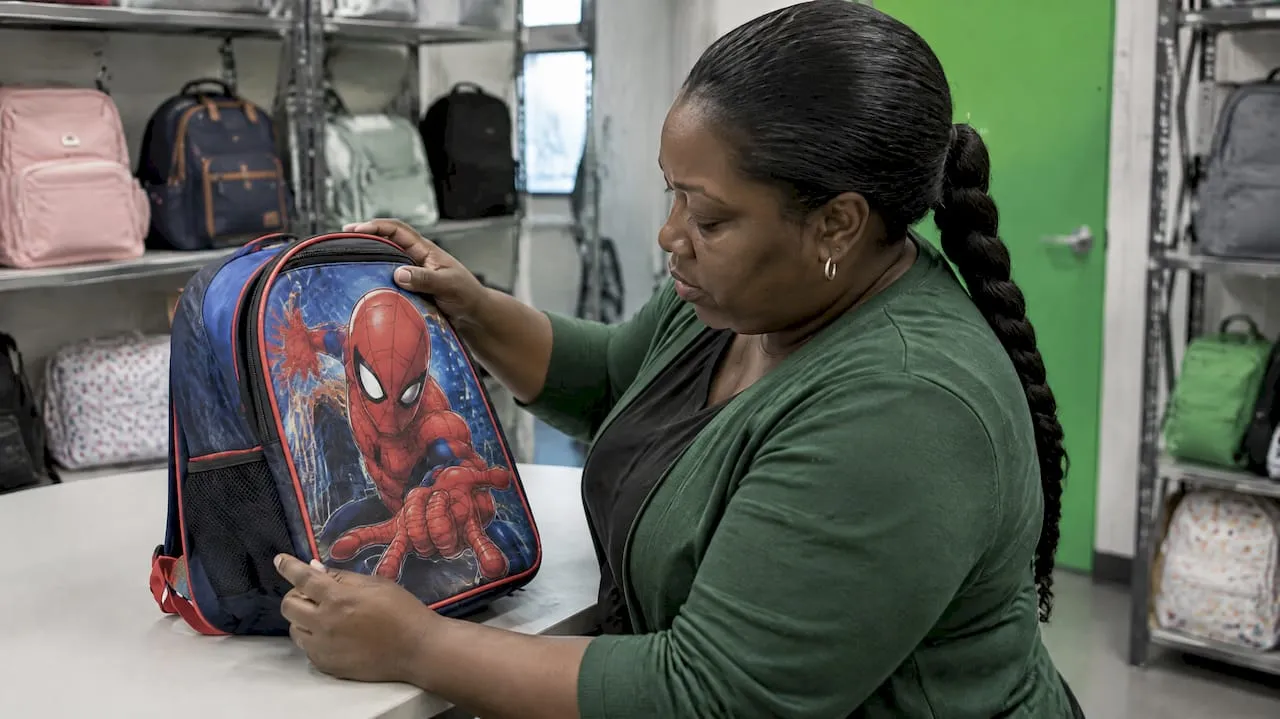
Superheroes, anime characters, sports clubs and film titles are trademarks and usually copyrighted as well. “Spider-Man Kids Backpack” from an unlicensed supplier is a double risk.
5. Brand names in hidden fields
Titles are not the only place. Vendor and brand fields set to a third party, image filenames, alt text, tags and product images showing logos can all carry the problem. Audit them together with the title.
6. Slogans and product-line names
A mark can be a tagline or a model name, not only a company name. If it sounds like a capitalised product name from another company, treat it as a mark.
How to write a title without a trademark
A good title does two jobs: it tells a human what the product is, and it matches how shoppers search. Brand names are rarely needed for either, because most searches for a product type are generic.
A reliable formula:
Product type + key feature + material or size + use or audience
For example:
- “Women’s Waterproof Hiking Boots, Lightweight Leather, Non-Slip Sole”
- “Insulated Stainless Steel Tumbler, 30 oz, Keeps Drinks Cold 24 Hours”
- “Soft Silicone Phone Case for iPhone 15, Shockproof, Matte Finish”
The last one is the only title that names a brand, and it does so for a compatibility reason. Keep that kind of reference narrow and factual.
A five-step check before you publish
- Strip the supplier title. Delete every capitalised name, model code and slogan you did not create.
- Search the remaining distinctive words. Look them up in the USPTO trademark search if a word seems invented or unusual. A hit in your product class means rewrite.
- Check claims. Remove “official”, “genuine”, “authentic” and “licensed” unless you can prove them.
- Check the product. If the item itself copies a brand’s logo or distinctive design, do not list it.
- Check every field. Vendor, tags, image names, alt text and image content, not just the title.
A title that passes all five checks also reads better, because it speaks to what the buyer needs. For other data checks that catch errors before Google does, see 5 product data checks for Merchant Center disapprovals.
Trademark, copyright and SEO are three different things
Sellers mix these up, and the confusion causes bad decisions.
- Trademark protects the identity of a source. The question is whether buyers are likely to be confused. It applies to names, logos and slogans.
- Copyright protects creative expression, including product photos and written descriptions, and includes an exclusive right of reproduction. Copying a competitor’s description word for word is a copyright and duplicate-content problem even when no brand name appears.
- SEO is about visibility. Using a third party’s mark as a search keyword to steer traffic can raise infringement questions of its own (American Bar Association).
The consequence for a dropshipper: a title can be trademark-clean and still be a copy of someone else’s page. Removing a brand name does not make copied text yours. Both layers need fixing, which is why we treat unique wording and clean titles as one workflow.
Our perspective: titles are a data problem, not a legal one
We build Ecom-eye for Shopify dropshippers who list products in bulk, and the same pattern repeats. Stores rarely get into trouble because someone decided to infringe. They get into trouble because 300 products were imported with supplier titles, and no one read them.
Here is our view, and it shapes how the platform works:
- Brand names in titles are rarely worth the risk. The traffic they bring is traffic looking for the brand’s own product. A buyer typing a brand name wants that brand, and a lookalike disappoints them, which means refunds and chargebacks.
- Uniqueness and trademark hygiene belong together. Content that is generated fresh for each user, rather than copied from a competitor or a supplier, is the best protection against both duplicate content and borrowed names. Every listing we generate is unique, even when two users start from the same product link.
- Do the check at scale, before publishing. Reviewing titles one by one stops working past a few dozen products. The fix has to sit in the import step.
- Treat Merchant Center as part of the product. A disapproval or suspension costs more than the listing it hit, because it takes your Shopping visibility with it. That is why the platform includes tools for Merchant Center and variant management.
No software replaces legal advice on a specific dispute. If you receive a demand letter or a trademark complaint, speak to a trademark attorney before you reply.
— Koen
Using Ecom-eye to clean titles in bulk
If you import from AliExpress, Amazon, Temu or competitor Shopify links, Ecom-eye generates fresh titles, descriptions and AI product images for each product, with multi-language output and one-click export to Shopify. You start from the product data, not the supplier’s wording, so brand-stuffed titles do not carry over. You still review the output, particularly for any compatibility claims.
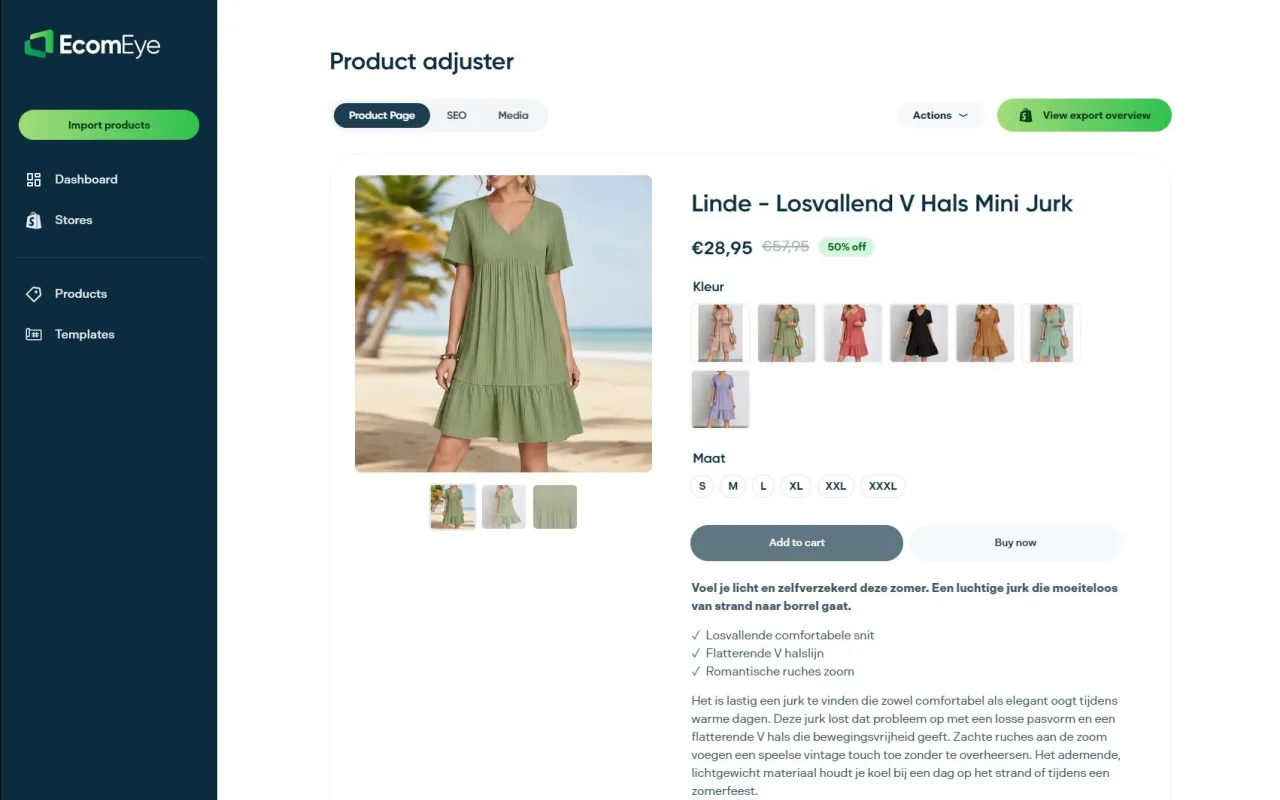
Plans on the pricing page start with Try-out at €39 per month, and Scaler is €99 per month. You can see how the writing side works on the AI product description generator page, and the AI product image generator page covers the images, which matter because logos visible in a photo are as risky as a name in a title.
If you already have flagged listings
Act in this order:
- Read the notice. The disapproval or suspension message names the policy. Do not guess.
- Fix everything, not just the named item. Rewrite titles, descriptions, brand fields and images across the catalogue. Merchant Center reviews the current state of your feed, so leftovers can sink an appeal.
- Document anything legitimate. If you really are an authorised reseller, collect the authorisation documents before you appeal.
- Appeal once, with a clean feed. Repeated weak appeals do not help.
Our first-hour checklist for Merchant Center suspensions and the guide to fixing four common disapprovals lay out these steps in more detail. To stop it recurring, read how to avoid Merchant Center suspensions and why dropshippers fail Google checks.
If the complaint comes from a brand owner directly, rather than from Google, remove the content first and talk to a trademark attorney before replying.
FAQ
Can I put a brand name in my product title if I sell the genuine product?
Generally yes, if the product really is genuine and you do not imply you are the brand or an authorised dealer when you are not. Keep the title factual and avoid logos. If a brand has a reseller agreement or brand-use rules, follow them, and keep proof of how you source the goods.
Is “compatible with” enough to protect me?
No. It helps when it is true, necessary and plainly worded, and courts have recognised comparable uses under nominative fair use. But it is a defence argued after a complaint, not a guarantee. Put the product first, the brand name later, and never use the logo.
Does Google ban trademarks in titles?
For free listings Google says it does not restrict retailers’ use of trademarks in titles or descriptions for trademarked or compatible products. It does review owner complaints about confusion over origin. Misrepresentation and counterfeit rules are stricter and can lead to suspension.
Do words like “inspired by” or “style” make a brand name safe?
No. They still attach another company’s goodwill to your product and can suggest a link to the brand. Describe the design in generic terms instead, such as colour, shape, material and use.
What should I do if a brand owner complains about my listing?
Remove or rewrite the listing straight away, check the rest of your catalogue for the same problem, and keep records. For anything beyond a simple takedown request, consult a trademark attorney before responding.
Sources
- About Trademark Infringement, USPTO
- Nominative Fair Use for TMs, Sidley Austin
- United States Court of Appeals for the Ninth Circuit, 2020 opinion
- Informative use: necessity or infringement?, Novagraaf
- Trademarks, Google Merchant Center Help
- Misrepresentation, Google Merchant Center Help
- Counterfeit products, Google Merchant Center Help
- Online Use of Third Party Trademarks, American Bar Association
- Trademark search, USPTO
Ready to boost your product pages?
Generate high-converting, SEO-optimized product pages in bulk using AI automation used by e-commerce experts.
No credit card required