What is ecommerce thought leadership and how to master it in 2026
Discover advanced ecommerce thought leadership strategies for Shopify dropshipping stores in 2026. Build authority, boost SEO, and drive organic traffic without ad dependency.

Most dropshipping entrepreneurs believe paid ads are the only path to scaling a Shopify store. This misconception costs them thousands in ad spend while missing the sustainable growth engine: thought leadership. Establishing authority through expert content, organic reach, and community trust builds lasting market presence and SEO performance that paid campaigns can never replicate. In 2026, mastering ecommerce thought leadership separates struggling dropshippers from industry leaders. This guide reveals advanced strategies to position your store as a trusted authority, attract organic traffic, and dominate search rankings without constant ad dependency.
Table of Contents
- Defining Ecommerce Thought Leadership And Its Role In Dropshipping
- Challenges And Nuances Of SEO For Dropshipping Stores On Shopify
- Effective Strategies To Build Ecommerce Thought Leadership And Organic Traffic In 2026
- Measuring Success And Maintaining Your Thought Leadership Edge
- Boost Your Dropshipping SEO With EcomEye
- What Is Ecommerce Thought Leadership?
- How Can Shopify Dropshipping Stores Improve Their SEO?
- Why Is Organic Dropshipping Important For Thought Leadership?
Key takeaways
| Point | Details |
|---|---|
| Thought leadership drives sustainable growth | Building authority through expert content and organic strategies reduces reliance on paid ads and creates lasting SEO value. |
| Dropshipping SEO requires specialised tactics | Unique challenges like duplicate content and Shopify technical limitations demand tailored optimisation approaches. |
| Seasonal and compliance strategies differentiate winners | Planning campaigns in advance and prioritising product authenticity verification create competitive advantages in 2026. |
| Measuring performance sustains leadership | Tracking dropshipping-specific metrics and adapting to platform changes maintains long-term market dominance. |
Defining ecommerce thought leadership and its role in dropshipping
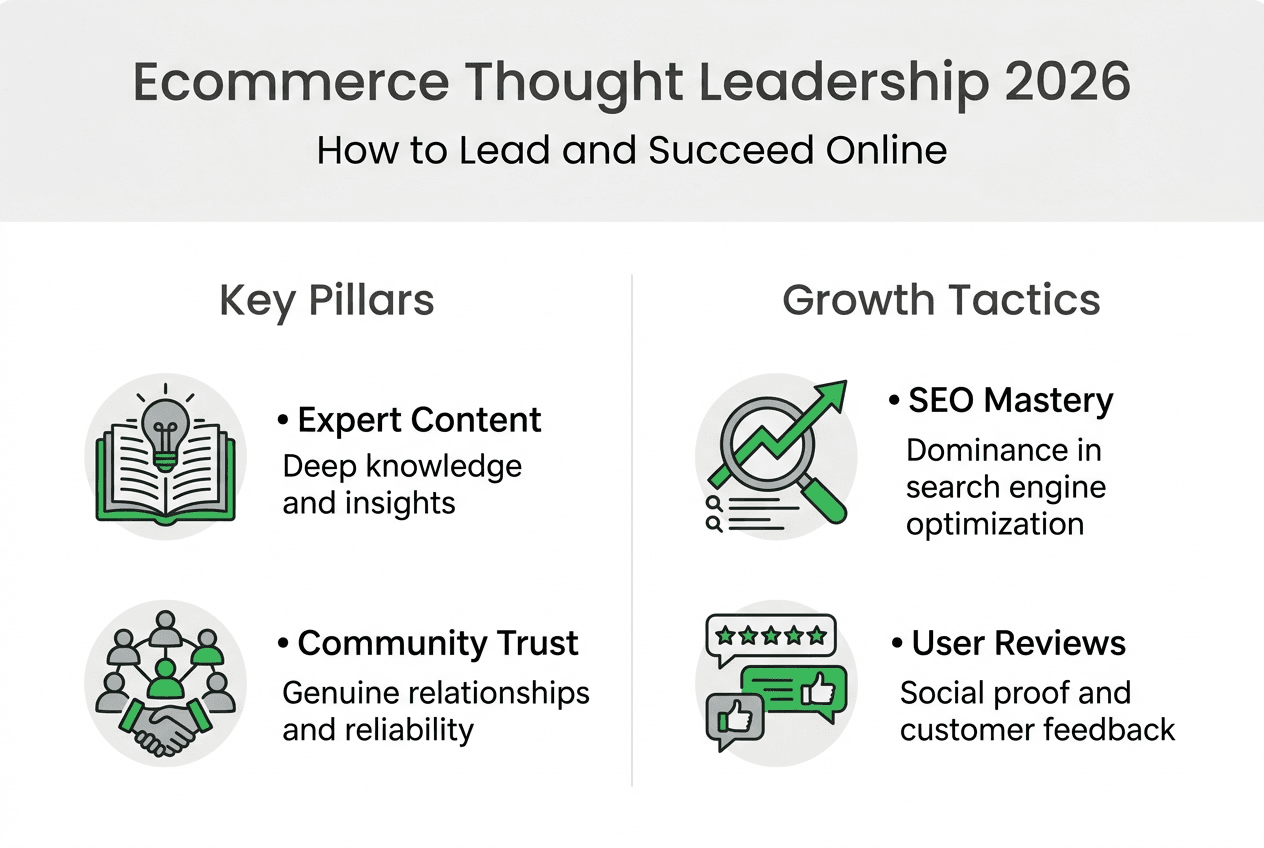
Ecommerce thought leadership means establishing your brand as the go-to authority in your niche through valuable content, genuine expertise, and organic community engagement. Unlike traditional marketing that pushes products through ads, thought leadership pulls customers by demonstrating deep knowledge and solving real problems. For dropshipping stores, this approach transforms you from another supplier into a trusted advisor customers actively seek out.
Organic dropshipping emphasises creating engaging content and building community relationships across multiple platforms to sell products without continuous ad spend. This contrasts sharply with paid advertising-focused growth, which stops delivering results the moment you stop spending. Thought leadership creates compounding returns: each piece of quality content continues attracting visitors and building authority long after publication.
Dropshipping SEO occupies a unique space, combining affiliate marketing tactics with e-commerce optimisation to enhance visibility and sales. Understanding this hybrid nature is crucial for Shopify dropshipping SEO basics. The strategy rests on three pillars:
- Thorough keyword research identifying high-intent search terms your target audience uses
- Quality content that educates, informs, and genuinely helps potential customers make decisions
- Structured website architecture that search engines can easily crawl and understand
The benefits extend far beyond search rankings. Thought leadership builds brand credibility that commands premium prices and customer loyalty. Your store becomes a destination, not just another option in a crowded marketplace. Customers trust your product recommendations because you’ve demonstrated expertise. This trust translates into higher conversion rates and lower customer acquisition costs.
Many dropshippers fall into common pitfalls in 2026 by copying competitor content or relying solely on supplier descriptions. These shortcuts destroy SEO potential and prevent thought leadership development. Instead, investing in original, valuable content positions your store as an industry resource worth following and sharing.
Challenges and nuances of SEO for dropshipping stores on Shopify
Dropshipping stores face distinctive SEO obstacles that traditional e-commerce businesses avoid, including duplicate content from supplier-provided descriptions and slow loading times from third-party resources. These challenges directly undermine thought leadership efforts because search engines penalise sites that don’t offer unique value or optimal user experience.

Duplicate content poses the biggest threat. When hundreds of dropshippers use identical product descriptions from suppliers, Google struggles to determine which site deserves ranking. Your store gets lost in the crowd, invisible to potential customers. Page speed issues compound this problem: slow-loading product pages increase bounce rates and signal poor quality to search algorithms.
Shopify’s technical limitations hinder SEO performance for large stores, particularly around duplicate URLs and inadequate canonical tag handling. These platform-specific issues create indexation problems where search engines waste crawl budget on duplicate pages instead of your valuable content. The consequences ripple through your entire SEO strategy, suppressing organic visibility and brand credibility.
Apply these critical SEO fixes to overcome Shopify dropshipping challenges:
- Audit all canonical tags to ensure they point to preferred page versions and eliminate duplicate URL issues.
- Rewrite every product description with unique, keyword-optimised content that provides genuine value beyond supplier text.
- Optimise image file sizes and implement lazy loading to dramatically improve page speed scores.
- Configure proper URL structure avoiding parameters and session IDs that create duplicate content.
- Set up 301 redirects for any changed URLs to preserve link equity and prevent broken links.
- Implement schema markup for products to enhance search result displays with rich snippets.
Pro Tip: Run monthly technical SEO audits focusing specifically on canonical tags and page load speed. These two factors cause the most ranking penalties for Shopify dropshipping stores but are easily fixable with consistent monitoring.
Technical SEO excellence separates thriving dropshipping stores from struggling competitors. Mastering Shopify’s platform limitations and proactively addressing duplicate content creates the foundation for sustainable organic growth and genuine thought leadership.
Understanding Shopify page layout optimisation and implementing page automation strategies helps overcome these technical barriers at scale. Without addressing these foundational issues, even brilliant content strategy fails to achieve its potential impact.
Effective strategies to build ecommerce thought leadership and organic traffic in 2026
Implementing essential strategies like keyword research, on-page SEO optimisation, and link building significantly improves search rankings and attracts organic traffic. These tactics form the operational backbone of thought leadership, transforming strategic vision into measurable results. Each element reinforces the others, creating compounding growth effects.
Keyword research goes beyond finding high-volume terms. Identify long-tail keywords reflecting specific customer problems and purchase intent. These phrases attract qualified visitors ready to buy rather than casual browsers. Map keywords to specific product categories and content topics, ensuring comprehensive coverage of your niche.
- Create pillar content addressing broad topics in your niche with comprehensive guides that establish expertise
- Develop cluster content diving deep into specific subtopics and linking back to pillar pages
- Build quality backlinks through guest posting on industry blogs and earning mentions from authoritative sites
- Optimise meta titles and descriptions with compelling copy that improves click-through rates from search results
Seasonal SEO campaigns deliver exceptional returns when planned strategically. Launching campaigns in advance captured a 256% sales increase during Q3 2025 versus Q3 2024 by targeting peak product demand windows. Start preparing seasonal content three months before peak periods, building topical authority before competitors flood the market.
User-generated content and community engagement build credibility that paid advertising cannot replicate. Encourage customer reviews, showcase user photos, and feature customer success stories. This social proof strengthens thought leadership by demonstrating real-world impact and satisfied customers. Respond to comments and questions promptly, showing your brand values genuine relationships over transactions.
Compliance creates competitive advantage in 2026 as regulations tighten around product authenticity and supplier transparency. Implement rigorous supplier audits verifying product quality and origin. Document your verification processes and share them openly, positioning your store as the ethical choice in a market plagued by questionable practices.
| Strategy | Primary Benefit | Implementation Difficulty | Time to Results |
|---|---|---|---|
| SEO Optimisation | Sustainable organic traffic | Medium | 3-6 months |
| Social Media Engagement | Brand awareness and community | Low | 1-3 months |
| User-Generated Content | Trust and social proof | Low | 2-4 months |
| Email Marketing | Direct customer relationships | Medium | 1-2 months |
Pro Tip: Leverage AI tools for efficient bulk product page creation that maintains uniqueness and SEO quality. Understanding ecommerce localisation and creating optimised product pages at scale transforms time-consuming manual work into automated advantage.
Investing in SEO proves cost-effective for dropshipping, building credibility and driving traffic without ongoing ad spend. The initial effort requires patience, but the long-term payoff dwarfs paid advertising returns. Your content library becomes an appreciating asset, continuously generating value.
Implementing must-have Shopify store features optimised for both SEO and conversions ensures technical infrastructure supports your thought leadership content strategy.
Measuring success and maintaining your thought leadership edge
Tracking the right metrics reveals whether your thought leadership strategy delivers results or needs adjustment. Focus on indicators that directly connect to business outcomes rather than vanity metrics that look impressive but don’t drive revenue.
Monitor these critical performance indicators monthly:
- Organic traffic growth trends showing steady increases over time rather than temporary spikes
- Keyword ranking improvements for your target terms, especially movement into top three positions
- Backlink quality and quantity from authoritative domains in your niche
- Page indexation status ensuring search engines discover and rank your content
A Shopify SEO case study demonstrated 30,400% organic traffic growth alongside massive keyword ranking increases through systematic link building and technical optimisation. These results prove that consistent execution of fundamentals creates extraordinary outcomes over time.
Adapting to Shopify’s technical changes and evolving SEO best practices maintains competitive advantage. Google updates algorithms constantly, and Shopify releases platform updates that can impact SEO performance. Stay informed through industry publications and test changes on staging environments before rolling out site-wide.
| Traditional SEO Metric | Dropshipping-Specific Indicator | Why It Matters More |
|---|---|---|
| Total organic traffic | Product page traffic percentage | Reveals if visitors reach conversion-focused pages |
| Bounce rate | Add-to-cart rate from organic | Measures traffic quality and purchase intent |
| Time on site | Product description engagement | Shows if unique content holds attention |
| Domain authority | Niche-specific backlink ratio | Indicates relevance of authority signals |
Pro Tip: Set up automated alerts for sudden keyword ranking drops using analytics tools. Quick response to ranking shifts prevents small issues from becoming major traffic losses. Proper keyword mapping and on-page optimisation prove essential for maintaining product page rankings.
Maintaining relevance requires regular content updates reflecting current trends, customer questions, and industry developments. Refresh existing articles with new data, update product recommendations, and expand sections that receive high engagement. This signals to search engines that your site remains active and authoritative.
Continuously optimising Shopify page layouts and implementing automated SEO improvements ensures technical performance keeps pace with content quality. Thought leadership demands excellence across all dimensions: content, technical SEO, user experience, and authentic engagement.
Boost your dropshipping SEO with EcomEye
Building thought leadership requires creating unique, optimised product pages at scale without sacrificing quality or burning countless hours on manual work. EcomEye solves this challenge by automating the complex SEO tasks that hold most dropshipping stores back from achieving their organic growth potential.
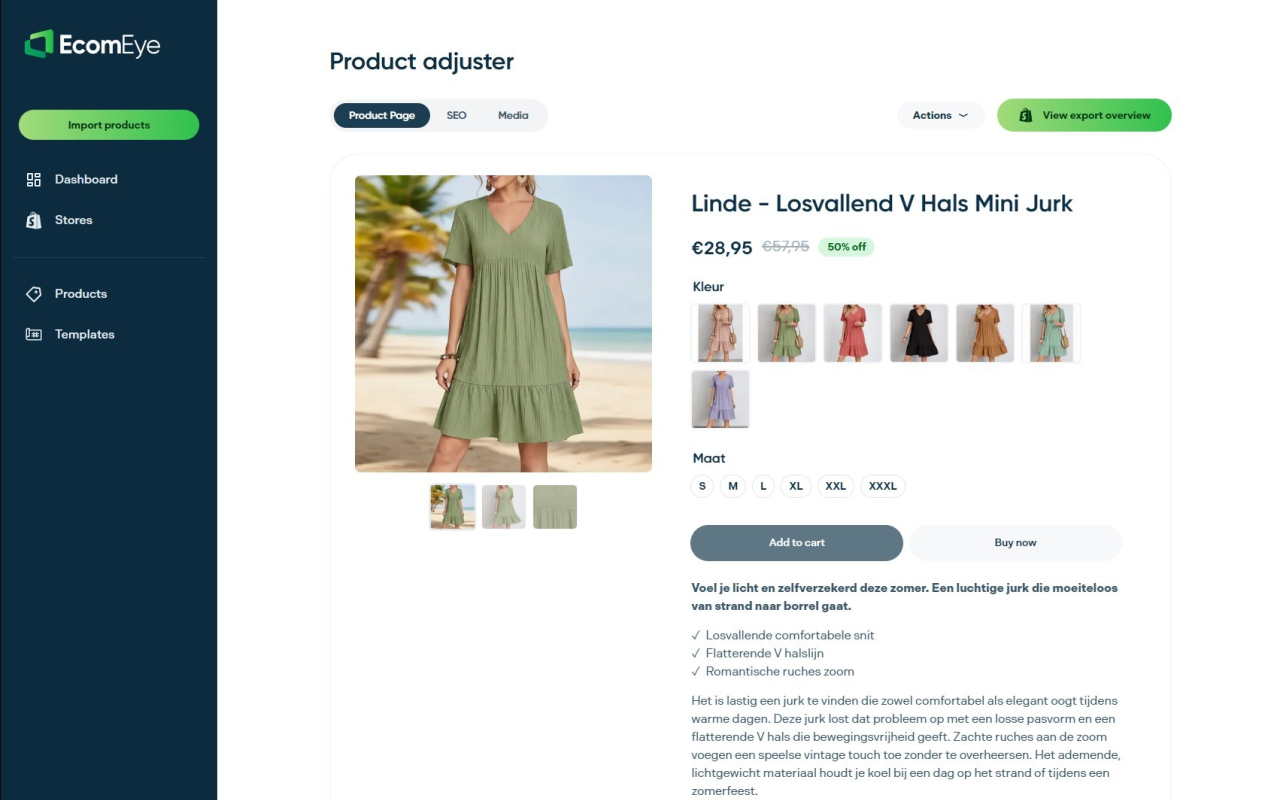
Our AI-powered platform generates copyright-safe, SEO-optimised product pages in bulk, eliminating duplicate content issues that destroy search rankings. Import products from AliExpress or competitor links, then automatically create unique titles, clean descriptions, and high-quality images. Export directly to Shopify in one click. No rewriting, no copyright risk, no manual work consuming your valuable time.
Flexible pricing plans suit different business sizes and growth stages, making professional-grade SEO automation accessible whether you’re launching your first store or scaling an established operation. Discover how EcomEye transforms tedious product page creation into a competitive advantage that supports your thought leadership goals.
What is ecommerce thought leadership?
Ecommerce thought leadership establishes authority and trust by sharing expertise, creating valuable content, and building community influence within your niche. It positions your brand as the knowledgeable resource customers turn to for guidance, not just products. This approach differentiates your store in crowded markets and attracts organic traffic without relying solely on paid advertising. Luxury ecommerce brands demonstrate how thought leadership commands premium positioning and customer loyalty.
How can Shopify dropshipping stores improve their SEO?
Apply technical fixes addressing duplicate content through canonical tags and unique product descriptions. Optimise product pages with keyword-rich metadata and compelling copy that serves both search engines and human readers. Build quality backlinks through guest posting and earning mentions from authoritative industry sites. Leverage Shopify-specific SEO tools and automation to overcome platform limitations efficiently. Comprehensive Shopify dropshipping SEO tips provide detailed implementation guidance for each optimisation area.
Why is organic dropshipping important for thought leadership?
Organic dropshipping focuses on authentic engagement and valuable content rather than paid ads, building sustainable customer relationships that compound over time. This approach improves SEO through natural link acquisition and social sharing whilst positioning your brand as a trusted authority within your niche. Customers developed through organic channels demonstrate higher lifetime value and loyalty compared to ad-driven acquisitions. Understanding why dropshipping fails reveals how neglecting organic strategies undermines long-term viability. Organic dropshipping strategies create foundations for lasting market presence.
Ready to boost your product pages?
Generate high-converting, SEO-optimized product pages in bulk using AI automation used by e-commerce experts.
No credit card required